CRISPR-Cas13 Systems for RNA Targeting: A Comprehensive Guide for Researchers and Therapeutic Development
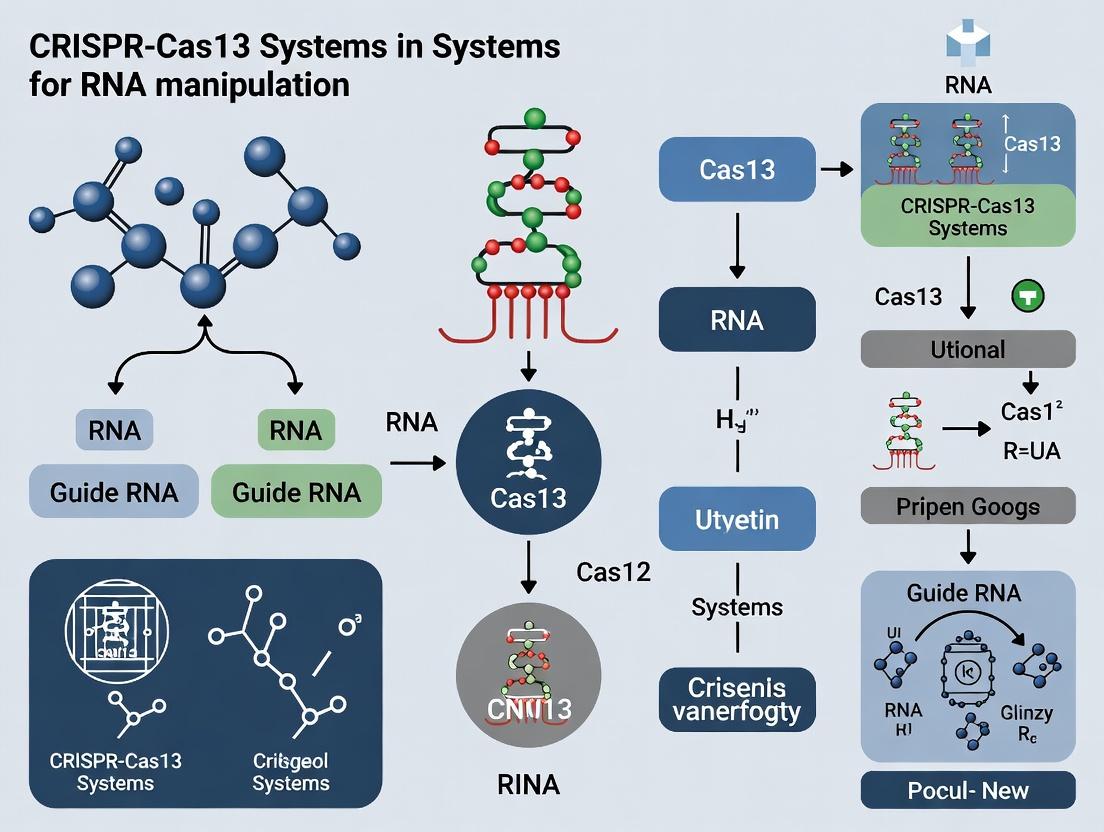
This article provides a comprehensive overview of CRISPR-Cas13 systems as programmable tools for RNA manipulation, tailored for researchers, scientists, and drug development professionals.
CRISPR-Cas13 Systems for RNA Targeting: A Comprehensive Guide for Researchers and Therapeutic Development
Abstract
This article provides a comprehensive overview of CRISPR-Cas13 systems as programmable tools for RNA manipulation, tailored for researchers, scientists, and drug development professionals. It explores the foundational biology and discovery of Cas13 variants (Intent 1), details methodological approaches and cutting-edge applications in diagnostics, transcriptome engineering, and antiviral strategies (Intent 2). The guide addresses common experimental challenges and optimization strategies for specificity and delivery (Intent 3), and concludes with a critical evaluation of validation techniques and a comparative analysis with other RNA-targeting platforms like RNAi and antisense oligonucleotides (Intent 4).
Understanding CRISPR-Cas13: From Bacterial Immunity to Programmable RNA-Targeting
The Discovery and Natural Function of Cas13 in Prokaryotic Adaptive Immunity
Cas13 (formerly known as C2c2) was identified in 2015 through a comprehensive bioinformatic search for novel CRISPR-Cas systems. Unlike DNA-targeting Cas9 and Cas12, Cas13 was characterized as a single-effector RNA-guided ribonuclease, establishing a new Class 2 (type VI) CRISPR-Cas system. Its discovery expanded the understanding of prokaryotic adaptive immunity to include direct RNA targeting.
Table 1: Key Milestones in Cas13 Discovery
| Year | Milestone | Key Finding | Reference |
|---|---|---|---|
| 2015 | Initial Bioinformatics Identification | Cas13 (C2c2) identified as a putative RNA-targeting system. | Shmakov et al., Mol Cell, 2015 |
| 2016 | Experimental Characterization | Demonstrated RNA-guided RNA cleavage; identified "collateral" RNase activity. | Abudayyeh et al., Science, 2016 |
| 2017 | Subtype Delineation | Cas13a-d subtypes classified; High-fidelity variants engineered. | Smargon et al., Mol Cell, 2017 |
| 2020 | In Vivo Function Elucidated | Demonstrated primary natural role in anti-phage defense via RNA degradation. | Meeske et al., Nature, 2020 |
Natural Function in Prokaryotic Immunity
The natural function of Cas13 is to provide immunity against RNA phages and DNA phages during their transcriptional phase. Upon infection, prokaryotes integrate spacers derived from phage RNA transcripts into their CRISPR locus. Upon re-infection, the mature crRNA guides Cas13 to complementary viral RNA, triggering sequence-specific cleavage. This activates the non-specific collateral RNase activity, leading to a programmed cell death or dormancy to abort the infection, protecting the bacterial population.
Title: Cas13 Natural Antiviral Immune Pathway
Application Notes: Cas13 for RNA Manipulation
Cas13's programmable RNA-binding and cleavage activity has been repurposed for diverse applications:
- RNA Knockdown: A precise alternative to RNAi, especially in prokaryotes and organelles.
- Diagnostics: Leveraging collateral activity for ultrasensitive nucleic acid detection (e.g., SHERLOCK).
- Base Editing: Fusing deaminase domains to catalytically inactive Cas13 (dCas13) for RNA base editing (REPAIR).
- Imaging & Tracking: dCas13 fused to fluorescent proteins for live-cell RNA imaging.
Table 2: Quantitative Comparison of Common Cas13 Orthologs
| Ortholog | Size (aa) | PFS Requirement | Collateral Activity | Typical Cleavage Efficiency (in vitro) | Primary Application |
|---|---|---|---|---|---|
| LwaCas13a | 968 | 3' H (A, U, C) | High | >95% | Diagnostics, RNA knockdown |
| PspCas13b | 1127 | 3' D (A, G, U) | High | >90% | RNA knockdown, editing |
| RfxCas13d | 967 | None | Moderate | >85% | In vivo RNA knockdown |
| LshCas13a | 968 | 3' H (A, U, C) | High | >95% | SHERLOCK diagnostics |
Detailed Protocols
Protocol 4.1: In Vitro RNA Cleavage Assay
Purpose: Validate guide RNA efficiency and Cas13 ribonuclease activity.
Research Reagent Solutions:
- Purified Cas13 Protein: Recombinant his-tagged protein, the core effector.
- In Vitro Transcribed Target RNA: Contains the target sequence.
- Synthetic crRNA: 64-66 nt, direct repeat + spacer sequence.
- Nuclease-Free Buffer (10X): 200 mM HEPES, 1M NaCl, 100 mM MgCl2, pH 6.8.
- RNA Loading Dye (2X): Contains EDTA to chelate Mg2+ and halt reaction.
- Denaturing PAGE Gel (8% Urea): For resolving cleavage fragments.
Methodology:
- Complex Formation: Mix 50 nM Cas13 protein with 75 nM crRNA in 1X buffer. Incubate at 37°C for 10 min.
- Reaction Initiation: Add target RNA to a final concentration of 100 nM. Final reaction volume: 20 µL.
- Cleavage Incubation: Incubate at 37°C for 30-60 minutes.
- Reaction Termination: Add 20 µL of 2X RNA loading dye. Heat at 95°C for 5 min.
- Analysis: Load samples on a pre-run 8% denaturing urea-PAGE gel. Run at 20W for 45-60 min. Visualize via SYBR Gold staining.
Title: In Vitro Cas13 Cleavage Assay Workflow
Protocol 4.2: Mammalian Cell RNA Knockdown
Purpose: Achieve targeted RNA degradation in mammalian cells using RfxCas13d.
Research Reagent Solutions:
- Cas13d Expression Plasmid: e.g., pXR001: EF1a-RfxCas13d-NLS-P2A-Puro.
- Guide RNA Expression Vector: U6-driven crRNA expression cassette.
- Lipid-Based Transfection Reagent: For plasmid delivery.
- Cell Lysis Buffer (RNA-Safe): Contains RNase inhibitors.
- RT-qPCR Reagents: For knockdown efficiency quantification.
Methodology:
- Cloning: Clone spacer sequence (22-30 nt) into the guide RNA vector.
- Cell Seeding: Seed HEK293T cells in a 24-well plate to reach 70-80% confluency at transfection.
- Transfection: Co-transfect 250 ng of Cas13d plasmid and 250 ng of guide RNA plasmid per well using lipid reagent.
- Incubation: Harvest cells 48-72 hours post-transfection.
- Analysis: Isolate total RNA, perform cDNA synthesis, and run qPCR with target-specific primers. Normalize to a housekeeping gene (e.g., GAPDH).
The Scientist's Toolkit: Essential Reagents
| Reagent | Function & Description | Example Product/Catalog |
|---|---|---|
| Recombinant Cas13 Protein | Purified effector nuclease for in vitro assays (cleavage, diagnostics). | LwaCas13a, His-tag (GenScript) |
| Synthetic crRNA | Chemically synthesized, high-purity guide RNA for consistent activity. | Alt-R CRISPR-Cas13 crRNA (IDT) |
| dCas13-ADAR Fusion Plasmid | Catalytically dead Cas13 fused to adenosine deaminase for RNA editing (A->I). | psp-dCas13b-ADAR2dd (Addgene #103863) |
| Collateral Activity Reporter RNA | Fluorescently quenched RNA reporter for detecting Cas13 activation. | RNAse Alert v2 Substrate (Thermo Fisher) |
| Cas13 Stable Cell Line | Mammalian cell line constitutively expressing RfxCas13d for genetic screens. | HEK293T RfxCas13d-Blast (Sigma) |
| High-Sensitivity RNA Detection Kit | Leverages collateral activity for low-abundance RNA detection. | SHERLOCK Detection Kit (Mammoth Biosciences) |
Within the broader thesis on CRISPR-Cas13 systems for RNA manipulation research, understanding the distinct characteristics of the four primary Cas13 family variants (Cas13a, Cas13b, Cas13c, and Cas13d) is crucial. These RNA-guided, RNA-targeting enzymes have revolutionized programmable RNA detection, knockdown, and editing. This application note provides a detailed comparison of their key properties, associated protocols, and essential research tools to guide experimental design.
Key Characteristics and Quantitative Comparison
Table 1: Comparative Properties of Cas13 Family Variants
| Characteristic | Cas13a (e.g., LshCas13a) | Cas13b (e.g., PspCas13b) | Cas13c (e.g., HheCas13c) | Cas13d (e.g., RfxCas13d) |
|---|---|---|---|---|
| Primary Source | Leptotrichia shahii | Prevotella sp. | unidentified | Ruminococcus flavefaciens |
| crRNA Length | ~64 nt | ~79 nt | ~72 nt | ~65 nt |
| Direct Repeat (DR) Structure | 5' handle (28 nt), loop (5 nt), 3' handle (31 nt) | 5' DR (36 nt), stem-loop (21 nt), 3' DR (22 nt) | Short 5' DR, stem-loop, 3' DR | Minimal 5' and 3' DRs |
| Protospacer Flanking Site (PFS) | Prefers 3' H (A, U, C; not G) for LshCas13a | Prefers 5' D (A, G, U; not C) for PspCas13b | No strict PFS requirement | No strict PFS requirement |
| Protein Size | ~140 kDa | ~125 kDa | ~110 kDa | ~105 kDa |
| Catalytic Domains | 2 HEPN domains | 2 HEPN domains | 2 HEPN domains | 2 HEPN domains |
| Collateral Activity | High | Very High | Moderate | Moderate/Low |
| Primary Applications | RNA knockdown, SHERLOCK detection | RNA knockdown, SHERLOCKv2, REPAIR | RNA knockdown | RNA knockdown, in vivo studies |
Detailed Experimental Protocols
Protocol 1: Mammalian Cell RNA Knockdown Using RfxCas13d (Cas13d)
Objective: To achieve specific, efficient knockdown of a target mRNA in mammalian cells. Principle: The Cas13d:crRNA ribonucleoprotein complex binds complementary target RNA, activating non-specific RNase (collateral) activity that leads to target degradation.
Materials:
- Mammalian cell line (e.g., HEK293T)
- Plasmid expressing NLS-tagged RfxCas13d OR purified RfxCas13d protein
- Expression plasmid for U6-driven crRNA or synthetic crRNA
- Transfection reagent (e.g., Lipofectamine 3000)
- RNA isolation kit (e.g., TRIzol)
- RT-qPCR reagents
Method:
- Design crRNA: Design a 22-30 nt spacer sequence complementary to the target mRNA region. Avoid extensive secondary structure. For plasmid expression, clone into a U6 promoter-driven vector.
- Deliver Components: Seed cells in a 24-well plate 24h prior. Co-transfect 500 ng Cas13d expression plasmid and 250 ng crRNA expression plasmid (or 50 nM synthetic crRNA + 100 ng protein if using RNP) using lipofection.
- Incubate: Harvest cells 48-72 hours post-transfection.
- Analyze Knockdown: Isolate total RNA. Perform reverse transcription and quantitative PCR (RT-qPCR) for the target gene. Normalize to a housekeeping gene (e.g., GAPDH). Calculate % knockdown relative to non-targeting control crRNA.
Expected Outcome: Efficient knockdown (70-95%) can be achieved with optimized crRNAs.
Protocol 2: Specific High-sensitivity Enzymatic Reporter UnLOCKing (SHERLOCK) for Detection
Objective: To detect attomolar levels of specific RNA sequences using Cas13b collateral activity. Principle: Target RNA binding activates Cas13b's collateral cleavage of a reporter RNA, generating a fluorescent signal.
Materials:
- Recombinant PspCas13b protein
- In vitro transcribed crRNA targeting sequence of interest
- Synthetic target RNA (for standard curve) or clinical sample
- Fluorescent quenched reporter RNA (e.g., FAM-UUUU-BHQ1)
- T7 RNA polymerase for RPA amplification (if needed)
- Recombinase Polymerase Amplification (RPA) kit (for pre-amplification)
- Plate reader or fluorometer
Method:
- Amplify (if needed): For low-abundance targets, perform isothermal RPA on extracted nucleic acids using T7-promoter-containing primers to amplify the target region.
- Transcribe: Use T7 RNA polymerase to transcribe RPA amplicons to RNA.
- Detect: In a 20 µL reaction, combine:
- 200 nM PspCas13b
- 200 nM crRNA
- 2 µM fluorescent reporter
- 1x Reaction Buffer (20 mM HEPES, 60 mM NaCl, 6 mM MgCl2, pH 6.8)
- Input RNA sample or transcript from step 2.
- Incubate & Measure: Incubate at 37°C in a plate reader, monitoring fluorescence (Ex/Em ~485/535 nm) every 30 seconds for 1-2 hours.
- Analyze: Determine time to positive threshold (TTP) or endpoint fluorescence. Quantify using a standard curve.
Expected Outcome: Detection sensitivity as low as 2 aM for specific RNA targets.
Visualization of Workflows
The Scientist's Toolkit: Research Reagent Solutions
Table 2: Essential Reagents for Cas13 Research
| Reagent / Solution | Function / Description | Example Vendor/Catalog |
|---|---|---|
| Recombinant Cas13 Proteins (a, b, c, d) | Purified, active enzyme for in vitro assays (detection, cleavage). | IDT, Thermo Fisher, BioLegend |
| crRNA Cloning Vectors (U6 promoter) | Plasmid backbones for expressing crRNAs in mammalian cells. | Addgene (e.g., #109053 for Cas13d) |
| Cas13 Mammalian Expression Plasmids | Plasmids for constitutive or inducible expression of NLS-tagged Cas13 variants. | Addgene (e.g., #109049 for RfxCas13d) |
| Fluorescent Quenched RNA Reporters | Oligoribonucleotides with fluorophore/quencher for collateral activity detection. | IDT, Metabion, Biosearch Tech |
| Synthetic crRNAs (chemically modified) | Nuclease-resistant, high-affinity crRNAs for RNP delivery and in vivo use. | Synthego, Dharmacon, IDT |
| RNP Transfection Reagents | Lipids or polymers for efficient delivery of Cas13:crRNA ribonucleoprotein complexes. | Lipofectamine CRISPRMAX, Neon System |
| Positive Control Target RNA | Synthetic RNA containing the target sequence for assay validation and standardization. | TriLink BioTechnologies |
| HEK293T Cas13 Stable Cell Line | Cell line stably expressing a Cas13 variant for rapid crRNA screening. | GenScript (custom service) |
Application Notes
CRISPR-Cas13 systems are programmable RNA-guided RNA-targeting effectors that have revolutionized RNA manipulation research. Their core mechanism relies on two integrated functions: (1) sequence-specific binding to a target RNA via a guide RNA (crRNA), and (2) subsequent collateral, trans-cleavage of nearby non-target RNA molecules. This activity makes Cas13 a powerful tool for RNA detection, degradation, and imaging.
Within the broader thesis on CRISPR-Cas13 for RNA research, this mechanism enables diverse applications. The high specificity of target recognition allows for precise interrogation of RNA function and localization. The promiscuous trans-cleavage activity, once activated by target binding, provides a catalytic amplification signal that is harnessed in ultrasensitive diagnostic platforms like SHERLOCK and CARMEN. For therapeutic development, engineered variants with modulated trans-cleavage are being explored for selective RNA knockdown in eukaryotic cells without activating the innate immune response, offering a potential pathway for targeting viral RNAs or correcting transcript imbalances in genetic disorders.
Recent advances (2023-2024) include the development of next-generation Cas13 orthologs (e.g., Cas13d, Cas13X/Y) with improved fidelity and smaller sizes for viral delivery, and the engineering of "tunable" Cas13 systems where trans-cleavage activity can be controlled by small molecules or external stimuli, enhancing safety for in vivo use.
Table 1: Characteristics of Common Cas13 Orthologs
| Ortholog | Origin | Size (aa) | crRNA Length (nt) | PFS Requirement | Primary Application |
|---|---|---|---|---|---|
| Cas13a (LshC2C2) | Leptotrichia shahii | ~1250 | 64-66 | 3' Protospacer Flanking Site (A, U preferred) | RNA knockdown, detection (SHERLOCK) |
| Cas13b (PspCas13b) | Prevotella sp. | ~1150 | 64-66 | 3' & 5' PFS (Dependent on subtype) | RNA knockdown, base editing (REPAIR) |
| Cas13d (RfxCas13d) | Ruminococcus flavefaciens | ~930 | 65-67 | None | In vivo RNA knockdown (compact size) |
| Cas13X.1 | Metagenomic discovery | ~775-850 | ~70-80 | None | Ultra-compact for viral delivery, diagnostics |
Table 2: Key Performance Metrics in Diagnostic Applications
| Assay Platform | Cas13 Variant | Limit of Detection (LoD) | Time-to-Result | Amplification Method | Reference |
|---|---|---|---|---|---|
| SHERLOCKv2 | LwaCas13a, PsmCas13b | ~2 aM (attomolar) | ~60-90 minutes | RPA (recombinase polymerase amplification) | Gootenberg et al., 2018 |
| CARMEN | LwaCas13a | Single molecule/µL (multiplexed) | ~4-8 hours | RPA + Microfluidic Array | Ackerman et al., 2020 |
| SATORI | LwaCas13a | ~0.82 aM | <30 minutes | RT-RPA, Microfluidic | Shinoda et al., 2023 |
Experimental Protocols
Protocol 1:In VitroCharacterization of Cas13Trans-Cleavage Kinetics
Objective: To quantify the collateral cleavage activity of a purified Cas13 protein upon activation by a specific target RNA.
Materials:
- Purified recombinant Cas13 protein (e.g., LwaCas13a)
- In vitro transcribed target RNA and non-target reporter RNA
- Synthetic crRNA complementary to target RNA
- Fluorescently quenched RNA reporter (e.g., FAM-UUUUU-BHQ1)
- Reaction buffer (20 mM HEPES pH 6.8, 50 mM KCl, 5 mM MgCl₂, 1 mM DTT)
- Real-time fluorescence plate reader or qPCR instrument.
Methodology:
- Complex Formation: Pre-complex 50 nM Cas13 protein with 60 nM crRNA in 1X reaction buffer. Incubate at 37°C for 15 minutes.
- Reaction Setup: In a 96-well plate, dilute the Cas13:crRNA complex in 1X buffer containing 5 mM MgCl₂. Add fluorescent RNA reporter to a final concentration of 1 µM.
- Baseline Measurement: Place plate in a fluorescence plate reader (37°C, excitation 485 nm, emission 520 nm). Measure fluorescence every 30 seconds for 5 minutes to establish baseline.
- Reaction Initiation: Manually add target RNA to each well at a final concentration of 5 nM. Mix quickly by pipetting.
- Kinetic Measurement: Immediately resume fluorescence measurement every 30 seconds for 60-90 minutes.
- Data Analysis: Plot fluorescence over time. Calculate the initial velocity (V₀) and the time to reach 50% maximum fluorescence (T₅₀). Normalize data to negative controls lacking target RNA or crRNA.
Protocol 2: Targeted RNA Knockdown in Mammalian Cells Using RfxCas13d
Objective: To achieve specific degradation of a endogenous mRNA transcript in cultured mammalian cells.
Materials:
- HEK293T or other relevant cell line
- Plasmid expressing mammalian codon-optimized RfxCas13d (pC013-RfxCas13d)
- Plasmid expressing crRNA under U6 promoter (pC013-sgRNA construct)
- Lipofectamine 3000 or similar transfection reagent
- TRIzol Reagent for RNA extraction
- RT-qPCR reagents (reverse transcriptase, SYBR Green master mix, primers for target and housekeeping gene).
Methodology:
- crRNA Design: Design a 22-30nt spacer sequence complementary to the target mRNA exon region. Clone into the pC013-sgRNA vector using BsmBI restriction sites.
- Cell Transfection: Seed cells in a 24-well plate. At 70-80% confluency, co-transfect 250 ng of pC013-RfxCas13d and 250 ng of pC013-sgRNA (target or non-targeting control) using Lipofectamine 3000 per manufacturer's protocol.
- Incubation: Harvest cells 48-72 hours post-transfection.
- RNA Analysis: a. Extract total RNA using TRIzol. b. Synthesize cDNA from 1 µg total RNA using a high-capacity reverse transcription kit. c. Perform qPCR using gene-specific primers. Use a housekeeping gene (e.g., GAPDH, ACTB) for normalization.
- Knockdown Evaluation: Calculate relative transcript abundance using the 2^(-ΔΔCt) method. Compare cells transfected with target-specific crRNA to those with non-targeting control crRNA.
Diagrams
Title: Cas13 RNA Target Recognition and Trans-Cleavage Activation
Title: SHERLOCK-Based Diagnostic Assay Workflow
The Scientist's Toolkit
Table 3: Essential Research Reagent Solutions for Cas13 Experiments
| Item | Function/Description | Example Vendor/Product |
|---|---|---|
| Recombinant Cas13 Protein | Purified enzyme for in vitro cleavage, kinetics, and diagnostic assay development. | IDT (Alt-R S.p. Cas13), BioLabs (LwaCas13a). |
| Synthetic crRNA | Chemically synthesized guide RNA for complexing with Cas13 protein. Critical for specificity. | IDT (Alt-R CRISPR-Cas13 crRNA), Synthego. |
| Fluorescent Quenched RNA Reporter | Single-stranded RNA oligo with fluorophore and quencher. Cleavage separates the pair, generating fluorescence. | IDT (RNase Alert Reporter), custom synthesis (FAM-UUUUU-BHQ1). |
| Cas13 Expression Plasmid | Mammalian expression vector for delivering Cas13 orthologs (e.g., RfxCas13d) into cells. | Addgene (pC013-RfxCas13d). |
| crRNA Expression Vector | U6-promoter driven plasmid for expressing guide RNAs in mammalian cells. | Addgene (pC013-sgRNA backbone). |
| Isothermal Amplification Mix | For pre-amplifying target nucleic acids prior to Cas13 detection (e.g., RPA, TMA kits). | TwistDx RPA kits, NEB WarmStart RTx. |
| RNA-free DNase & RNase Inhibitors | Essential for handling RNA targets and preventing degradation of reagents in sensitive assays. | Thermo Fisher (SUPERase-In), Promega RNasin. |
Application Notes
HEPN (Higher Eukaryotes and Prokaryotes Nucleotide-binding) domains are the defining and catalytically active modules of Cas13 effector proteins within CRISPR systems. In the context of CRISPR-Cas13 systems for RNA manipulation, understanding HEPN domains is fundamental to leveraging these systems for diagnostics, transcriptome engineering, and therapeutic development.
- Structural Basis: Each Cas13 protein typically contains two HEPN domains that come together to form a single ribonuclease (RNase) active site. The conserved catalytic motifs (RxxxxH) within these domains are essential for non-specific single-stranded RNA (ssRNA) cleavage upon target RNA recognition and Cas13 activation.
- Functional Consequence: This collateral RNase activity is the cornerstone of Cas13-based applications like SHERLOCK (Specific High-sensitivity Enzymatic Reporter unLOCKing) for nucleic acid detection. The activated Cas13 indiscriminately cleaves nearby reporter RNA molecules, generating a detectable signal.
- Engineering Potential: Mutating the key catalytic residues (e.g., R to A, H to A) in the HEPN domains creates catalytically "dead" Cas13 (dCas13). This variant retains RNA-binding capacity and serves as a platform for programmable RNA-binding proteins, enabling applications such as RNA tracking, splicing modulation, and base editing (e.g., REPAIR) without cleavage.
Quantitative Data on Cas13 HEPN Domain Mutants
Table 1: Functional Impact of HEPN Domain Catalytic Motif Mutations in Cas13a (from *LshCas13a)*
| Mutation (Residue/ Motif) | Collateral RNase Activity | Target RNA Binding | Primary Application | Reference |
|---|---|---|---|---|
| Wild-Type (R...H) | 100% (High) | Retained | RNA detection, knockdown | Abudayyeh et al., 2017 |
| R472A / H477A | <1% (Negligible) | Retained | RNA imaging, splicing modulation (dCas13) | Abudayyeh et al., 2017 |
| R1048A / H1053A | <1% (Negligible) | Retained | RNA imaging, splicing modulation (dCas13) | Abudayyeh et al., 2017 |
| Double Mutant (R472A/H477A & R1048A/H1053A) | 0% (Abrogated) | Retained | High-fidelity dCas13 applications |
Table 2: Performance Metrics of Cas13 vs. dCas13 in Key Assays
| Parameter | Cas13 (WT) | dCas13 (HEPN mutant) |
|---|---|---|
| Target RNA Knockdown Efficiency | >95% (in vitro) | N/A |
| Collateral Cleavage Rate (kcat) | ~1,000 s⁻¹ (for reporter) | 0 s⁻¹ |
| RNA Binding Affinity (KD) | ~1-10 nM | ~1-10 nM |
| Signal-to-Noise in SHERLOCK | >50:1 | N/A |
Experimental Protocols
Protocol 1: Validation of HEPN-Dependent Collateral RNase Activity (Fluorometric Assay)
Objective: To quantitatively measure the ssRNA collateral cleavage activity of purified wild-type Cas13 protein compared to HEPN-domain mutants.
Materials:
- Purified wild-type Cas13 protein.
- Purified dCas13 protein (harboring HEPN catalytic mutations).
- Target-specific crRNA.
- Synthetic target RNA oligonucleotide.
- Fluorescently quenched RNA reporter probe (e.g., FAM-UUUUUU-BHQ1).
- Nuclease-free water and buffers (e.g., 20 mM HEPES, 60 mM NaCl, 6 mM MgCl₂, pH 6.8).
- 96-well clear optical reaction plate.
- Real-time PCR instrument or fluorescence plate reader.
Procedure:
- Prepare a 1 µM stock solution of the fluorescent RNA reporter probe in nuclease-free buffer.
- In a reaction tube, pre-complex 50 nM Cas13 (or dCas13) with 75 nM crRNA in 1X reaction buffer. Incubate at 25°C for 10 minutes.
- In a 96-well plate, mix:
- 10 µL of Cas13:crRNA complex.
- 1 µL of 1 µM target RNA (final 100 nM) or nuclease-free water (no-target control).
- 89 µL of 1X reaction buffer containing the fluorescent reporter probe (final 100 nM).
- Immediately place the plate in a real-time PCR instrument.
- Monitor fluorescence (FAM: Ex/Em ~485/535 nm) every 30 seconds for 60-90 minutes at 37°C.
- Analysis: Plot relative fluorescence units (RFU) vs. time. Wild-type Cas13 with target will show a sharp exponential increase. HEPN mutants should show background signal similar to no-target controls, confirming loss of activity.
Protocol 2: Generation of a Catalytically Inactive dCas13 Expression Construct
Objective: To introduce point mutations into the HEPN domain catalytic motifs of a Cas13 expression plasmid.
Materials:
- Plasmid encoding your Cas13 ortholog (e.g., pC013-LwCas13a).
- High-fidelity DNA polymerase (e.g., Q5).
- DpnI restriction enzyme.
- T4 DNA Ligase.
- Competent E. coli cells.
- Oligonucleotide primers designed for site-directed mutagenesis (e.g., NEB Q5 protocol).
- Agarose gel electrophoresis equipment.
- DNA sequencing services.
Procedure:
- Primer Design: Design forward and reverse primers complementary to the plasmid, containing the desired mutations (e.g., R472A: CGT→GCT; H477A: CAC→GCC). Ensure primers are ~30 bp with the mutation in the middle.
- PCR Amplification: Set up a PCR reaction with the Cas13 plasmid as template using the high-fidelity polymerase and mutagenic primers.
- Template Digestion: Treat the PCR product with DpnI (37°C, 1 hour) to digest the methylated parental plasmid template.
- Ligation & Transformation: Ligate the PCR product using T4 DNA Ligase (or use a kit for circular assembly). Transform the ligation product into competent E. coli cells.
- Screening & Validation: Isolate plasmid DNA from resulting colonies. Confirm the presence of mutations by Sanger sequencing across the entire edited HEPN domains.
Diagrams
Title: Cas13 HEPN Domain Activation and dCas13 Function
Title: Protocol for Collateral RNase Activity Assay
The Scientist's Toolkit: Research Reagent Solutions
Table 3: Essential Reagents for HEPN/Cas13 Research
| Reagent/Material | Function & Application | Example Vendor/Product |
|---|---|---|
| Purified Recombinant Cas13 Proteins | In vitro characterization of kinetics, specificity, and structural studies. Essential for diagnostic assay development. | GenScript, IDT, Applied Biological Materials |
| HEPN-Domain Mutant (dCas13) Plasmids | Tool for cellular RNA-targeting applications without cleavage (imaging, splicing, editing). | Addgene (e.g., Plasmid #109049 for LwaCas13a-d). |
| Fluorescent Quenched ssRNA Reporters | Sensitive detection of collateral RNase activity in real-time for assay optimization and diagnostics. | IDT (RNA Oligos with FAM/BHQ1), Biosearch Technologies. |
| Synthetic Target RNA & crRNA Pools | For controlled activation experiments, specificity screening, and diagnostic probe design. | Twist Bioscience, IDT, Horizon Discovery. |
| High-Fidelity Mutagenesis Kits | Reliable generation of point mutations in HEPN catalytic motifs to create dCas13 variants. | NEB Q5 Site-Directed Mutagenesis Kit, Agilent QuikChange. |
| RNase Inhibitors (e.g., SUPERase•In) | Critical for preventing non-specific RNA degradation during protein purification and in vitro transcript assembly. | Invitrogen, NEB. |
Within the broader thesis on CRISPR-Cas13 systems for RNA manipulation, understanding its fundamental divergence from DNA-targeting systems like Cas9 and Cas12 is critical. All systems utilize a guide RNA (crRNA) for target recognition, but their enzymatic activities, outcomes, and applications are distinct.
| Feature | Cas9 (Class 2, Type II) | Cas12 (Class 2, Type V) | Cas13 (Class 2, Type VI) |
|---|---|---|---|
| Primary Target | DNA (double-stranded) | DNA (single or double-stranded) | RNA (single-stranded) |
| Protospacer Adjacent Motif (PAM) | Required (dsDNA, PAM sequence) | Required (dsDNA, PFS for some) | Protospacer Flanking Site (PFS) (on RNA, less restrictive) |
| Cleavage Mechanism | Blunt-ended dsDNA breaks | Staggered dsDNA or ssDNA cuts | ssRNA cleavage |
| Catalytic Domains | RuvC, HNH (each cuts one DNA strand) | Single RuvC-like domain | Two HEPN ribonuclease domains |
| Collateral Activity | No | Yes (trans-ssDNA cleavage) | Yes (trans-ssRNA cleavage) |
| Primary Application | Gene knockout, knock-in, editing | DNA detection, editing | RNA knockdown, editing, detection |
Quantitative Comparison of Key Characteristics
| Parameter | Cas9 (SpCas9) | Cas12a (LbCas12a) | Cas13d (RfxCas13d/‘CasRx’) |
|---|---|---|---|
| Protein Size (aa) | ~1368 | ~1228 | ~967 |
| Guide RNA Length | ~100-nt sgRNA | ~42-44 nt crRNA | ~64-66 nt crRNA |
| Cleavage Temperature | 37°C optimal | 37°C optimal | 37°C, but active over range |
| Detection Sensitivity (LOD) | N/A (editing) | ~aM-µM (DETECTR) | ~aM-fM (SHERLOCK) |
| On-target Efficiency | 20-80% (varies) | 10-70% (varies) | 35-95% RNA knockdown |
| Collateral Cleavage Rate (k_cat) | Not applicable | ~1250 turnovers/hr | ~1200 turnovers/hr (LwCas13a) |
Experimental Protocols
Protocol A: Cas13d-mediated RNA Knockdown in Mammalian Cells
Objective: To achieve targeted degradation of a specific mRNA transcript using RfxCas13d.
Materials: See Scientist's Toolkit below. Procedure:
- Design crRNAs: Design 2-3 crRNAs targeting different regions of the mature mRNA transcript. Avoid secondary structures. A 28-30 nt spacer sequence is typical. In silico predict off-targets.
- Cloning: Clone each crRNA sequence into a mammalian expression vector (e.g., pC013-RfxCas13d-NLS-HA) downstream of a U6 promoter using BsmBI restriction sites.
- Cell Transfection: Seed HEK293T cells in a 24-well plate. At 70-80% confluency, co-transfect 500 ng of the Cas13d expression plasmid and 250 ng of the crRNA plasmid using a transfection reagent (e.g., Lipofectamine 3000).
- Harvest: 48-72 hours post-transfection, lyse cells in TRIzol Reagent for RNA isolation.
- Validation: Perform total RNA extraction, cDNA synthesis, and qPCR using primers flanking the target site. Normalize to housekeeping genes (e.g., GAPDH, ACTB). Compare to non-targeting crRNA control.
Protocol B: SHERLOCK for Nucleic Acid Detection (Cas13)
Objective: To detect a specific RNA sequence (e.g., viral RNA) using Cas13's collateral activity.
Procedure:
- Isothermal Amplification: Perform Recombinase Polymerase Amplification (RPA) or RT-RPA on the sample (42°C for 15-30 min) to amplify the target, incorporating a T7 promoter.
- T7 Transcription: Transcribe the RPA product to RNA using T7 RNA polymerase (37°C, 30 min).
- Cas13 Detection Reaction: Prepare a master mix containing:
- LwaCas13a or PsmCas13b protein (50 nM final)
- Specific crRNA (50 nM final)
- Fluorescent-quenched RNA reporter (e.g., FAM-UU-BHQ1, 500 nM final)
- RNase inhibitors. Add the transcribed RNA from step 2. Incubate at 37°C.
- Readout: Monitor real-time fluorescence on a plate reader or use an endpoint measurement after 30-90 min. A rise in fluorescence indicates target-mediated collateral cleavage of the reporter.
Diagrams
The Scientist's Toolkit
| Research Reagent Solution | Function in Cas13 Research |
|---|---|
| RfxCas13d (CasRx) Expression Plasmid | Mammalian codon-optimized Cas13d with nuclear localization signal (NLS) for RNA targeting in cells. |
| crRNA Cloning Vector (e.g., pC013) | Contains U6 promoter for Pol III-driven expression of guide RNA spacers in mammalian systems. |
| Fluorescent Quenched RNA Reporter (FAM-UU-BHQ1) | Substrate for collateral activity; cleavage releases fluorescence for detection assays (SHERLOCK). |
| T7 RNA Polymerase Kit | For in vitro transcription to generate RNA amplicons from RPA products in detection workflows. |
| Recombinase Polymerase Amplification (RPA) Kit | Isothermal amplification for sensitive target pre-amplification prior to Cas13 detection. |
| RNase Inhibitor (Murine or Human) | Essential for protecting RNA targets and reporters from non-specific degradation in reactions. |
| Nuclease-Free Water and Buffers | Critical for maintaining RNA integrity and ensuring specific enzymatic activity in all steps. |
CRISPR-Cas13 Methodology and Translational Applications in Biomedicine
Design Principles for CRISPR RNA (crRNA) and Target Selection
Within the broader thesis on CRISPR-Cas13 systems for RNA manipulation, the design of the CRISPR RNA (crRNA) and the selection of target RNA sequences are foundational to experimental success. Unlike DNA-targeting Cas9, Cas13 proteins (e.g., Cas13a, Cas13b, Cas13d) bind and cleave single-stranded RNA (ssRNA) in a programmable manner. This application note details the principles and protocols for designing effective crRNAs for Cas13-based applications, including RNA knockdown, imaging, and diagnostics.
Core Design Principles for Cas13 crRNAs
Structural Components of a Cas13 crRNA
A canonical Cas13 crRNA consists of two parts:
- Direct Repeat (DR): A ~36 nt sequence, conserved for each Cas13 subtype, that forms the protein-binding scaffold.
- Spacer Sequence (28-30 nt): A user-defined sequence complementary to the target RNA.
Key Parameters for Spacer and Target Selection
Based on current literature, the following quantitative parameters are critical for high activity and specificity.
Table 1: Quantitative Parameters for Cas13 crRNA Design
| Parameter | Recommended Value / Feature | Rationale & Notes |
|---|---|---|
| Spacer Length | 28 nucleotides (Cas13a/d), 30 nt (Cas13b) | Optimal for complex stability and cleavage efficiency. |
| GC Content | 30-70% (Optimal ~40-60%) | Affects binding affinity. Very high or low GC can reduce activity. |
| Target Accessibility | Avoid stable secondary structure in target region | Use RNA folding tools (e.g., RNAfold) to predict and avoid highly structured regions. |
| Off-Target Tolerance | ≤ 3 mismatches in spacer seed region (positions 1-10 from 3' end of spacer) | The seed region is critical for specificity. Mismatches here greatly reduce off-target cleavage. |
| PFS (Protospacer Flanking Site) | None for most Cas13 variants. | A key distinction from Cas9. Cas13 does not require a PAM but some variants (e.g., PspCas13b) prefer a 3' non-G for optimal activity. |
| Avoidance Sequences | Poly-T tracts, extensive self-complementarity within spacer | Poly-T may act as a termination signal; self-complementation can impair crRNA maturation. |
Protocol: A Workflow for Designing and Validating crRNAs
Protocol 1: In Silico Design and Selection of Cas13 crRNAs
Objective: To computationally design and rank candidate crRNAs against a target RNA transcript.
Materials:
- Software/Tools: NCBI Nucleotide BLAST, RNAfold (ViennaRNA Package), Custom Python scripts or online design tools (CHOPCHOP, CRISPick).
- Input: Target RNA sequence (FASTA format).
Procedure:
- Define Target Region: Identify the exon or functional domain of interest. For knockdown, target regions near the start codon or 5' UTR may be more effective, but this varies.
- Generate Candidate Spacers: Using a script or tool, tile the target region with 28-30 nt sequences, offset by 5-10 nt.
- Filter and Rank:
- Calculate GC% for each spacer. Filter out candidates outside 30-70%.
- Score target site accessibility. Use RNAfold to predict the local secondary structure of the target RNA. Calculate the probability of the target site being unpaired (high accessibility score).
- Perform specificity check. BLAST each spacer sequence against the relevant transcriptome (e.g., human RefSeq RNA) to identify potential off-targets. Reject candidates with perfect matches or ≤3 mismatches in the seed region to other transcripts.
- Final Selection: Select 3-5 top-ranked crRNAs with high accessibility scores, moderate GC content, and no predicted off-targets for experimental validation.
Protocol 2: Experimental Validation of crRNA Efficacy
Objective: To test the knockdown efficiency of designed crRNAs in a mammalian cell culture system.
Materials:
- Reagent Solutions: See The Scientist's Toolkit below.
- Equipment: Cell culture facility, transfection reagent, fluorescence microscope, RT-qPCR system or flow cytometer.
Procedure:
- Construct Expression Plasmids: Clone each candidate crRNA spacer into a Cas13 expression vector (e.g., pC013 for RfxCas13d) downstream of the DR sequence.
- Setup Reporter Assay (Optional but recommended): Co-transfect cells with:
- Cas13 expression plasmid (with crRNA expression cassette).
- A reporter plasmid expressing a fluorescent protein (e.g., GFP) fused to the target sequence.
- A control plasmid (e.g., expressing mCherry) for normalization.
- Transfection: Transfer HEK293T cells in a 24-well plate. For each crRNA, perform triplicate transfections.
- Quantification (48-72h post-transfection):
- For reporter assay: Analyze by flow cytometry. Calculate knockdown as the reduction in median GFP fluorescence (normalized to mCherry) relative to a non-targeting crRNA control.
- For endogenous target: Harvest cells for RNA extraction. Perform RT-qPCR, normalizing target mRNA levels to a housekeeping gene (e.g., GAPDH).
- Analysis: Identify the 1-2 most effective crRNAs for downstream applications.
The Scientist's Toolkit: Essential Reagents for Cas13 Experiments
Table 2: Key Research Reagent Solutions for Cas13/crRNA Work
| Reagent / Material | Function & Explanation |
|---|---|
| RfxCas13d (CasRx) Expression Plasmid | A compact, highly active Cas13 variant ideal for mammalian cell RNA knockdown. |
| crRNA Cloning Oligos | Complementary DNA oligonucleotides encoding the spacer sequence, with overhangs for Golden Gate or restriction enzyme cloning into the DR scaffold. |
| Non-targeting Control crRNA Plasmid | Encodes a crRNA with a spacer lacking complementarity to the host transcriptome. Essential for controlling for non-specific effects of Cas13 expression. |
| Fluorescent Reporter Plasmid (e.g., GFP-target) | Contains the target sequence fused to a reporter gene. Enables rapid, quantitative assessment of crRNA efficacy via fluorescence measurement. |
| Lipid-based Transfection Reagent (e.g., Lipofectamine 3000) | For efficient delivery of plasmid DNA or RNP complexes into mammalian cell lines. |
| RNase Inhibitor | Critical for in vitro Cas13 reactions (e.g., SHERLOCK) to preserve target RNA and prevent non-specific degradation. |
| SYBR Green-based RT-qPCR Master Mix | For quantifying changes in endogenous target RNA levels following Cas13-mediated knockdown. |
Visualizing Workflows and Principles
Title: Computational crRNA Design and Selection Workflow
Title: Cas13-crRNA Complex Mechanism and Activity
CRISPR-Cas13 systems (e.g., Cas13a, Cas13d) represent a programmable frontier for RNA knockdown, editing, and detection. The therapeutic and research utility of these systems is critically dependent on the efficient, safe, and context-specific delivery of the Cas13 effector and its guide RNA (gRNA). This application note details three primary delivery modalities—ribonucleoprotein (RNP) complexes, messenger RNA (mRNA), and viral vectors—contrasting their applications for in vitro and in vivo RNA manipulation research.
Ribonucleoprotein (RNP) Complexes
Direct delivery of pre-assembled, purified Cas13 protein complexed with in vitro-transcribed or synthetic gRNA.
Advantages: Immediate activity, no risk of genomic integration, rapid degradation minimizes off-target persistence. Disadvantages: Transient expression, lower in vivo delivery efficiency without advanced carriers.
Protocol 1.1: Lipofection of Cas13 RNP for In Vitro Knockdown Objective: Deliver Cas13d RNP into adherent mammalian cells to degrade a target mRNA.
- Complex Assembly: Combine 5 pmol of purified recombinant Cas13d protein (e.g., PspCas13b, RfxCas13d) with 7.5 pmol of crRNA (targeting sequence + direct repeat) in 1X Cas buffer. Incubate at 25°C for 10 min.
- Liposome Preparation: Dilute 3 µL of a cationic lipid-based transfection reagent (e.g., Lipofectamine CRISPRMAX) in 50 µL Opti-MEM. Incubate 5 min.
- Complex Formation: Mix the 10 µL RNP solution with the diluted lipid. Incubate 10-15 min at RT.
- Cell Transfection: Aspirate media from a 24-well plate of cells (~70% confluency). Add 0.5 mL fresh complete media. Add lipid-RNP complexes dropwise. Incubate at 37°C.
- Analysis: Harvest cells 24-48h post-transfection. Assess knockdown via RT-qPCR or RNA-seq.
Messenger RNA (mRNA)
Delivery of in vitro-transcribed mRNA encoding the Cas13 protein, often co-delivered with a gRNA expression plasmid or synthetic gRNA.
Advantages: Sustained but transient expression (days), higher in vivo potential than RNP, avoids nuclear entry. Disadvantages: Requires nucleoside modification to reduce immunogenicity; delivery vehicle essential.
Protocol 2.1: Electroporation of Cas13 mRNA for Primary Cell Editing Objective: Introduce Cas13a mRNA and synthetic gRNA into T cells for RNA-targeting applications.
- mRNA Preparation: Acquire or synthesize Cas13a mRNA with 5-methoxyuridine and pseudouridine modifications, capped and polyadenylated.
- Cell Preparation: Isolate primary human T cells and resuspend in electroporation buffer at 1-2 x 10^7 cells/mL.
- Loading: For 100 µL cell suspension, add 5 µg modified Cas13a mRNA and 2 µg synthetic crRNA. Mix and transfer to a 2mm electroporation cuvette.
- Electroporation: Pulse using a square-wave protocol (500 V, 5 ms pulse length, 1 pulse). Immediately add pre-warmed media.
- Recovery & Analysis: Culture cells in IL-2 containing media. Assess protein expression by flow cytometry (with a tag) and functional knockdown at 48-72h.
Viral Vectors
Engineered viruses (AAV, Lentivirus) delivering DNA cassettes for long-term expression of Cas13 and gRNA.
Advantages: Highly efficient transduction, stable long-term expression (lentiviral integration) or persistent episomal expression (AAV). Disadvantages: AAV cargo limit (~4.7 kb) constrains larger Cas13s; pre-existing immunity; potential for immunogenicity.
Protocol 3.1: AAV Production for In Vivo Cas13d Delivery Objective: Produce and titer AAV9 vectors expressing a compact Cas13d (RfxCas13d) and gRNA from a U6 promoter for murine liver delivery.
- Plasmid Tri-transfection: Seed HEK293T cells in a 10-layer cell factory. At ~80% confluency, co-transfect with: i) AAV Rep/Cap plasmid (serotype 9), ii) Adenoviral Helper plasmid, and iii) ITR-flanked AAV transgene plasmid (expressing RfxCas13d and gRNA) using PEI-Max.
- Harvest & Purification: At 72h, harvest cells and supernatant. Lyse cells, clarify via benzonase treatment and centrifugation. Purify virus from supernatant and lysate using iodixanol gradient ultracentrifugation.
- Concentration & Buffer Exchange: Concentrate using Amicon centrifugal filters (100 kDa MWCO). Exchange into sterile PBS + 5% sorbitol.
- Titration: Determine genomic titer (vg/mL) via ddPCR using primers/probe against the ITR or Cas13d transgene.
- In Vivo Administration: Administer via tail vein injection at a dose of 1x10^11 – 5x10^11 vg/mouse. Analyze target RNA knockdown in liver tissue 2-4 weeks post-injection.
Quantitative Comparison of Delivery Strategies
Table 1: Key Characteristics of Cas13 Delivery Platforms
| Feature | RNP Complex | Modified mRNA | AAV Vector | Lentiviral Vector |
|---|---|---|---|---|
| Payload | Protein + gRNA | mRNA (+gRNA) | DNA (gRNA + Cas13) | DNA (gRNA + Cas13) |
| Onset of Action | Minutes-Hours | Hours | Days-Weeks | Days-Weeks |
| Expression Duration | Hours-2 Days | 2-7 Days | Months (episomal) | Stable (integrated) |
| Cargo Size Limit | ~140 kDa protein | ~4-5 kb mRNA | ~4.7 kb total | ~8-10 kb total |
| Immunogenicity Risk | Low | Moderate-High | High (Capsid/Transgene) | High (Vector) |
| In Vivo Delivery Ease | Low (requires carrier) | Moderate (requires carrier) | High (systemic possible) | Moderate (ex vivo focus) |
| Primary Use Case | In vitro, ex vivo editing | In vitro, in vivo transient | In vivo long-term | In vitro, stable cell lines |
Table 2: Representative Delivery Efficiencies for Cas13 Systems (Literature Data)
| System | Cell Type / Tissue | Delivery Method | Reported Efficiency (Knockdown) | Key Citation Metric |
|---|---|---|---|---|
| Cas13d RNP | HEK293T (in vitro) | Lipofection | >70% mRNA knockdown | RT-qPCR at 48h (Konermann et al., 2018) |
| Cas13a mRNA | Primary Human T Cells | Electroporation | ~60% protein expression | Flow cytometry at 24h (Cui et al., 2023) |
| AAV-Cas13d | Mouse Liver (in vivo) | Systemic (IV) injection | ~50% target RNA reduction | RNA-seq at 2 weeks (Cheng et al., 2023) |
| Lentiviral-Cas13d | Neuronal Cell Line | Transduction | >80% stable knockdown | Blot at 2 weeks (Zhao et al., 2024) |
The Scientist's Toolkit: Research Reagent Solutions
| Item | Function & Relevance |
|---|---|
| Recombinant Cas13 Protein | Purified, tag-free or affinity-tagged protein for RNP assembly. Essential for in vitro and some ex vivo applications. |
| Chemically Modified crRNA | Synthetic guide RNA with 2'-O-methyl and phosphorothioate backbone modifications; enhances nuclease stability, especially for in vivo use. |
| N1-Methylpseudouridine mRNA | Modified nucleotide for in vitro transcription to produce Cas13 mRNA with reduced immunogenicity and enhanced translational yield. |
| Cationic Lipid Nanoparticles (LNPs) | Formulation vehicle for encapsulating and delivering mRNA or RNP in vivo. Critical for hepatocyte and systemic targeting. |
| AAV Serotype Library | Capsid variants (e.g., AAV9, AAV-PHPeB, AAVrh74) with distinct tropisms for targeting different tissues (CNS, liver, muscle). |
| Polyethylenimine (PEI-Max) | High-efficiency transfection polymer for large-scale plasmid transfections, such as during viral vector production. |
| Iodixanol Density Gradient | Non-ionic, iso-osmotic medium for the high-purity separation of intact AAV particles from cell debris and empty capsids via ultracentrifugation. |
| Droplet Digital PCR (ddPCR) | Absolute quantification method for determining the precise genomic titer (vg/mL) of viral vector preps without reliance on standards. |
Visualizations
Decision Workflow for Cas13 Delivery Strategy Selection
Cas13 RNP Lipofection Protocol Workflow
Molecular Pathways for Different Cas13 Delivery Strategies
Application Notes These platforms represent a paradigm shift in molecular diagnostics, leveraging the collateral RNA cleavage activity of Cas13 (or Cas12a in DETECTR) to achieve single-molecule sensitivity. Within broader CRISPR-Cas13 research for RNA manipulation, they exemplify a direct translational application where RNA targeting is repurposed for signal amplification. SHERLOCK and DETECTR enable specific detection of pathogens, genetic mutations, and cancer biomarkers from minimal input, such as saliva or blood. Their key advantages include minimal instrumentation, rapid time-to-result (<1 hour), and field-deployability via lateral flow readouts. Recent iterations, like SHERLOCKv2 and STOPCovid.v2, have enhanced multiplexing and incorporated extraction-free protocols, crucial for point-of-care use during outbreaks.
Quantitative Performance Data Summary
Table 1: Comparison of SHERLOCK and DETECTR Platform Performance
| Parameter | SHERLOCK (Cas13a) | DETECTR (Cas12a) |
|---|---|---|
| Target Molecule | RNA | DNA |
| Reported Sensitivity | ~2 aM (attomolar) in solution; ~1 copy/µL | ~aM (attomolar) in solution; single copy detection |
| Time to Result | 30 mins - 1 hour | 30 mins - 1 hour |
| Readout Methods | Fluorescent, Colorimetric Lateral Flow | Fluorescent, Colorimetric Lateral Flow |
| Key Demonstrated Targets | Zika virus, Dengue, SARS-CoV-2, SNP discrimination | HPV, SARS-CoV-2, Mycobacterium tuberculosis |
| Multiplexing Capacity | Up to 4 targets (SHERLOCKv2) | Typically 1-2 targets |
Experimental Protocols
Protocol 1: SHERLOCK Assay for Viral RNA Detection (Fluorescent Readout) Objective: Detect specific RNA sequences (e.g., SARS-CoV-2) from purified RNA or directly from heat-inactivated sample. Materials: Recombinant LwaCas13a, T7 RNA polymerase, RNase Inhibitor, custom crRNA, synthetic RNA reporter (FAM-quenched), RPA isothermal amplification reagents. Procedure:
- Sample Preparation: Extract RNA using a silica-column or magnetic bead-based kit. Alternatively, use heat-inactivated sample (e.g., 95°C for 5 min).
- Isothermal Amplification: Perform Recombinase Polymerase Amplification (RPA) at 42°C for 15-25 minutes using primers designed with a T7 promoter sequence.
- In Vitro Transcription: Directly add T7 RNA polymerase mix to the RPA product. Incubate at 37°C for 30 minutes to transcribe DNA amplicons into RNA.
- Cas13 Detection Reaction:
- Prepare a master mix containing: 50 nM LwaCas13a, 62.5 nM crRNA, 100 nM RNA reporter probe, 1 U/µL RNase Inhibitor, in reaction buffer.
- Add the transcribed RNA from step 3 to the master mix.
- Incubate at 37°C for 5-30 minutes in a real-time PCR machine or fluorometer.
- Detection: Measure fluorescence (FAM channel) in real-time or at endpoint. A positive signal is indicated by a significant increase over negative controls.
Protocol 2: DETECTR Assay for DNA Detection (Lateral Flow Readout) Objective: Visually detect specific DNA sequences (e.g., HPV16) via lateral flow strip. Materials: Recombinant LbCas12a, custom crRNA, ssDNA FQ reporter (FAM/Biotin), RPA amplification reagents, lateral flow strips (anti-FAM test line), running buffer. Procedure:
- DNA Extraction: Purify sample DNA using a commercial kit.
- Isothermal Amplification: Perform RPA at 37-42°C for 15-30 minutes using target-specific primers.
- Cas12 Detection Reaction:
- Prepare a master mix containing: 50 nM LbCas12a, 50 nM crRNA, 100 nM ssDNA FQ reporter (FAM-ssDNA-Biotin).
- Mix 5 µL of RPA product with the Cas12 master mix.
- Incubate at 37°C for 10 minutes.
- Lateral Flow Readout:
- Dilute the reaction with 80 µL of lateral flow running buffer.
- Insert the lateral flow strip (e.g., Milenia HybriDetect) into the mixture.
- Wait 2-5 minutes for capillary flow.
- Interpretation: A positive result shows both a control line and a test line (capturing cleaved FAM-labeled reporter fragments). A negative result shows only the control line.
Diagrams
Diagram Title: SHERLOCK and DETECTR Diagnostic Workflows
Diagram Title: Cas13 Collateral Cleavage Signaling Pathway
The Scientist's Toolkit: Research Reagent Solutions
Table 2: Essential Materials for Cas13-Based Diagnostic Assays
| Reagent/Material | Function & Explanation |
|---|---|
| Recombinant Cas13 Protein | Catalytic effector enzyme. Binds crRNA and possesses collateral RNase activity upon target recognition. |
| Custom crRNA | Guide RNA. Dictates target specificity by base-pairing with the target RNA sequence. |
| Isothermal Amplification Mix | Amplifies target nucleic acid at constant temperature (e.g., RPA, LAMP). Eliminates need for a thermal cycler. |
| Synthetic RNA Reporter | Quenched fluorescent RNA oligonucleotide. Collateral cleavage releases fluorescence, providing the detectable signal. |
| RNase Inhibitor | Protects the RNA reporter and target amplicons from degradation by environmental RNases. |
| T7 RNA Polymerase | Used in SHERLOCK to transcribe DNA amplicons from RPA into RNA for Cas13 detection. |
| Lateral Flow Strips | For visual readout. Often designed to capture cleaved, tagged reporter fragments (e.g., FAM/biotin). |
| Fluorometer/Plate Reader | For quantitative, fluorescent endpoint or real-time readout of the reaction. |
While CRISPR-Cas systems, particularly Cas9, have revolutionized DNA-targeting, CRISPR-Cas13 (e.g., Cas13a/d, Cas13b) provides a parallel, transformative platform for precise RNA manipulation. This family of RNA-guided, RNA-targeting effectors enables transient transcriptome engineering without genomic alteration. Within this thesis, Cas13 systems serve as the foundational chassis for RNA-targeting applications. However, the principles of transcriptome engineering extend beyond simple Cas13-mediated cleavage (knockdown) to encompass sophisticated modalities like programmable RNA splicing modulation and leveraging endogenous enzymes such as ADAR for base editing. These applications, detailed herein, represent the next frontier in RNA-targeted therapeutic and research interventions, building upon the programmability and specificity of the CRISPR-Cas13 paradigm.
Application Notes & Protocols
RNA Knockdown with Cas13
Application Note: Cas13 (e.g., RfxCas13d/CasRx) binds to target single-stranded RNA via a CRISPR RNA (crRNA) and exhibits collateral RNase activity upon target recognition, leading to transcript degradation and knockdown. This is ideal for loss-of-function studies, antiviral defense, and targeting pathogenic RNAs.
Protocol: Mammalian Cell Knockdown Using RfxCas13d (CasRx)
- Design crRNAs: Design 23-28nt spacer sequences complementary to the target RNA. Avoid stable secondary structures and seed regions. Typically, 3-5 crRNAs per target are designed and screened.
- Cloning: Clone crRNA arrays into a mammalian expression plasmid (e.g., pC0046-EF1a-CasRx-2A-EGFP-P2A-Puro backbone). Alternatively, clone individual crRNAs into a U6-driven expression vector.
- Cell Transfection: Seed HEK293T (or relevant) cells in a 24-well plate. At 70-80% confluency, co-transfect 500 ng of CasRx expression plasmid and 250 ng of crRNA expression plasmid using a transfection reagent like Lipofectamine 3000.
- Harvest and Analysis: 48-72 hours post-transfection, harvest cells for RNA extraction using TRIzol. Perform RT-qPCR to quantify knockdown efficiency relative to a non-targeting crRNA control.
Key Quantitative Data (Representative): Table 1: Typical Cas13-mediated Knockdown Efficiencies
| Cell Type | Target Gene | Cas13 Variant | Delivery Method | Knockdown Efficiency (%) | Duration (days) |
|---|---|---|---|---|---|
| HEK293T | MALAT1 (lncRNA) | RfxCas13d (CasRx) | Plasmid Transfection | 85 ± 5 | 3-5 |
| Primary Neurons | SNCA (α-synuclein) | PspCas13b | AAV9 | 70 ± 8 | 14 |
| Huh7 | SARS-CoV-2 RNA | LwaCas13a | RNP Electroporation | >99 | 2 |
RNA Splicing Modulation
Application Note: Catalytically inactive or “dead” Cas13 (dCas13) fused to splicing effector domains (e.g., SR proteins, hnRNPs) can be targeted to splice sites or regulatory elements to promote exon inclusion or exclusion. This holds promise for correcting aberrant splicing in diseases like spinal muscular atrophy or Duchenne muscular dystrophy.
Protocol: Modifying Splicing with dCas13-Splicing Effector Fusions
- Construct Assembly: Fuse dCas13b (lacking RNase activity) C-terminally to the splicing activator domain RS (arginine/serine-rich) or the repressor domain hnRNP A1 via a flexible linker (e.g., (GGGGS)3). Express from a CMV or EF1α promoter.
- crRNA Design: Design crRNAs to bind near the 3' or 5' splice site of the target exon, or within adjacent intronic splicing enhancer/silencer regions.
- Delivery & Validation: Co-transfect HeLa cells with the dCas13-effector plasmid and crRNA plasmid targeting a model minigene (e.g., SMN2 exon 7). After 48 hours, extract total RNA.
- Splicing Analysis: Perform RT-PCR using primers in the flanking constitutive exons. Resolve products on a high-percentage agarose gel. Quantify the percentage of transcripts containing the target exon via densitometry.
Key Quantitative Data (Representative): Table 2: Splicing Modulation Efficiency with dCas13 Effectors
| Target | Goal | Effector Domain | Model System | Baseline Inclusion | Post-Modulation Inclusion | Fold Change |
|---|---|---|---|---|---|---|
| SMN2 Exon 7 | Inclusion | RS | SMN2 Minigene | 15% | 65% | 4.3x |
| MAPT Exon 10 | Exclusion | hnRNP A1 | Tau Minigene | 80% | 25% | 0.3x |
| BIN1 Exon 11 | Inclusion | dCasRx-MBNL1 | iPSC-Derived Neurons | 40% | 85% | 2.1x |
RNA Editing with ADAR (RESCUE or RESTORE Systems)
Application Note: dCas13 is fused to the catalytic domain of an adenosine deaminase acting on RNA (ADAR, often human ADAR2dd). The dCas13 guides the editor to a specific RNA, where the ADAR domain converts adenosine (A) to inosine (I), read as guanosine (G) by cellular machinery. This enables precise A-to-I (functionally A-to-G) editing for research and therapeutic correction.
Protocol: A-to-I Editing Using dCas13-ADAR in Cells
- Editor Design: Use a construct expressing an engineered dCas13 (e.g., dPspCas13b) fused to ADAR2(E488Q) catalytic domain. Express a complementary guide RNA with a 20-30nt spacer and a specific “bystander” motif (often a 5'C or 3'G) for optimal editing.
- Target Selection: Identify target adenosines in the transcript of interest. The editing window is typically within 20 nucleotides 3' of the crRNA spacer region.
- Cell Culture & Transfection: Seed cells in a 12-well plate. At 60% confluency, co-transfect 750 ng of editor plasmid and 250 ng of guide RNA plasmid.
- Editing Assessment: Harvest RNA 72 hours post-transfection. Perform RT-PCR on the target region and submit the product for Sanger sequencing. Quantify editing efficiency by analyzing chromatogram trace deconvolution (e.g., using EditR or ICE software). For high-sensitivity detection, use targeted RNA-seq.
Key Quantitative Data (Representative): Table 3: RNA Editing Efficiency with dCas13-ADAR Systems
| Target Site | Cell Type | Editing System | Baseline A (%) | Edited I/G (%) | Primary Indels/Off-targets |
|---|---|---|---|---|---|
| ACTB (Synonymous) | HEK293FT | dCas13b-ADAR2dd | ~100% A | 45 ± 7% | <0.1% |
| PPIB (W56G) | HeLa | RESCUE (dCas13-ADAR) | ~100% A | 28 ± 4% | Not detected |
| AKT1 (E17K oncogene) | MCF-7 | RESTORE (optimized) | ~100% A | 60 ± 5% | <0.5% |
Visualization Diagrams
Diagram 1: Decision workflow for Cas13-based transcriptome engineering.
Diagram 2: Mechanism of dCas13-ADAR mediated RNA editing and functional outcome.
The Scientist's Toolkit: Research Reagent Solutions
Table 4: Essential Reagents for Transcriptome Engineering Experiments
| Reagent/Category | Example Product/Supplier | Function in Experiment |
|---|---|---|
| Cas13 Expression Plasmids | pC0046-CasRx (Addgene #109049); pHage-dPspCas13b-ADAR2dd (Addgene #138149) | Provides mammalian-codon optimized Cas13 or dCas13-effector fusion for transient expression. Backbone often includes fluorescent/Puromycin markers. |
| crRNA/cloning backbones | pXR001: U6-sgRNA(CRISPR)-EF1Alpha-CasRx-2A-Puro (Addgene # 138150) | Enables easy cloning of custom spacer sequences for guide RNA expression under a U6 promoter. |
| Delivery Reagents | Lipofectamine 3000 (Thermo Fisher); JetMessenger (Polyplus); AAVpro packaging system (Takara Bio) | Facilitates the introduction of plasmid DNA or ribonucleoprotein (RNP) complexes into mammalian cells. Choice depends on cell type and cargo. |
| Positive Control Targets | MALAT1 lncRNA; PPIB; ACTB | Well-characterized, abundantly expressed transcripts used to validate Cas13 system activity and optimize protocols. |
| Editing Detection Kits | EditR (IDT) software; ICE (Synthego) analysis tool; Archer FusionPlex for RNA-seq | Tools and kits to quantify base editing efficiency from Sanger sequencing traces or to perform deep sequencing of target regions. |
| dCas13 Effector Domains | Cloning vectors for RS, hnRNP A1, MBNL1 domains (e.g., Addgene) | Pre-cloned splicing effector domains for modular assembly with dCas13 to create custom splicing modulators. |
| RNP Components | Recombinant Cas13 protein (e.g., from PBL Assay Science); Synthetic crRNA (IDT, Sigma) | For delivery of pre-assembled Cas13 RNP complexes, offering rapid action and reduced off-target/immunogenicity concerns. |
Within the broader thesis on CRISPR-Cas13 systems for RNA manipulation, this document details specific application notes and protocols for three therapeutic areas. Cas13's RNA-guided RNase activity enables precise RNA targeting without genomic alteration, making it suitable for degrading pathogenic RNA transcripts, including viral genomes, oncogenic mRNAs, and mutant alleles causing toxic gain-of-function.
Targeting Viral RNAs
Application Notes
Cas13 systems (e.g., Cas13d, RfxCas13d) effectively degrade RNA viruses in cell culture. Recent studies demonstrate efficacy against SARS-CoV-2, Influenza A, and Dengue virus. Quantitative outcomes from key studies are summarized below.
Table 1: Cas13-Mediated Antiviral Efficacy In Vitro
| Target Virus | Cas13 Variant | Delivery Method | Readout | Reduction vs. Control | Reference (Year) |
|---|---|---|---|---|---|
| SARS-CoV-2 | RfxCas13d | Lentivirus | Viral RNA (qPCR) | 90-99% | Blanchard et al. (2021) |
| Influenza A | LwaCas13a | Lipid Nanoparticle (LNP) | Plaque Assay | >100-fold (PFU) | Freije et al. (2019) |
| Dengue Virus | PspCas13b | AAV | NS1 Protein (ELISA) | 85% | Yasmeen et al. (2022) |
Protocol: Cas13-LNP for Influenza A mRNA Targeting
Objective: Degrade Influenza A PB1 mRNA in A549 cells using LNP-encapsulated LwaCas13a/crRNA. Materials:
- LwaCas13a mRNA: In vitro transcribed, modified with 5-methoxyuridine.
- crRNA: Chemically synthesized, targeting conserved PB1 region (sequence: 5'-GACGUUCGCUAGUGCGACGA-3').
- LNP Formulation: Ionizable lipid (SM-102), cholesterol, DSPC, PEG-lipid at 50:38.5:10:1.5 molar ratio.
- A549 cells infected with Influenza A/Puerto Rico/8/1934 (H1N1). Procedure:
- LNP Preparation: Mix lipid components in ethanol. Combine with Cas13 mRNA and crRNA in citrate buffer (pH 4.0) using microfluidic mixing.
- Dialysis: Dialyze against PBS (pH 7.4) for 18h, filter (0.22 µm).
- Cell Treatment: Seed A549 cells (2.5e5/well) 24h pre-treatment. Infect with Influenza at MOI=0.1.
- Transfection: Add Cas13-LNPs (50 nM final RNA concentration) 1h post-infection.
- Harvest: At 24h post-treatment, lyse cells for RNA extraction.
- Analysis: Quantify viral PB1 RNA via RT-qPCR using GAPDH as endogenous control.
Research Reagent Solutions:
| Item | Function/Significance |
|---|---|
| SM-102 Ionizable Lipid | Enables efficient endosomal escape of RNA payload. |
| Chemically Modified crRNA | Increases stability and reduces immunogenicity. |
| RNeasy Mini Kit (Qiagen) | High-quality RNA extraction for sensitive RT-qPCR. |
| TaqMan Fast Virus 1-Step Master Mix | Optimized for precise quantification of viral RNA. |
Diagram 1: LNP-Cas13 antiviral experiment workflow.
Silencing Oncogenic mRNAs
Application Notes
Targeting fusion oncogenes (e.g., BCR-ABL) or overexpressed transcripts (e.g., MYC) with Cas13 reduces proliferation and induces apoptosis in cancer cell lines. Catalytically dead Cas13 (dCas13) fused to effectors allows for reversible modulation.
Table 2: Cas13-Mediated Oncogene Knockdown in Cancer Models
| Oncogene | Cancer Type | Cas13 System | Phenotypic Outcome | Efficiency (mRNA KD) | Study Model |
|---|---|---|---|---|---|
| BCR-ABL1 | CML | PspCas13b | Reduced proliferation | 92% | K562 cell line |
| KRAS(G12D) | Pancreatic | RfxCas13d | Increased apoptosis | 88% | MIA PaCa-2 cells |
| MYC | Burkitt’s | LwaCas13a | Cell cycle arrest | 95% | Raji cells |
| PML-RARA | APL | Cas13d | Differentiation | 90% | NB4 cell line |
Protocol: Targeting BCR-ABL in K562 Cells via Electroporation
Objective: Deliver RNP complexes of PspCas13b and crRNA to degrade BCR-ABL mRNA. Materials:
- Recombinant PspCas13b protein: Purified, NLS-tagged.
- crRNA: Targeting the fusion junction (Sequence: 5'-AAUUCUACUGUCAGUCCGAC-3').
- K562 chronic myeloid leukemia cells.
- Neon Transfection System (Thermo Fisher). Procedure:
- RNP Complex Formation: Mix PspCas13b (50 pmol) with crRNA (60 pmol) in duplex buffer. Incubate 10 min at 25°C.
- Cell Preparation: Harvest and wash K562 cells in PBS. Resuspend at 1e7 cells/mL in Buffer R.
- Electroporation: Mix 10 µL cell suspension with 5 µL RNP complex. Electroporate (1400V, 20ms, 1 pulse).
- Recovery: Immediately transfer cells to pre-warmed RPMI+10% FBS. Incubate at 37°C, 5% CO2.
- Analysis: At 48h, assay via RT-qPCR for BCR-ABL, Trypan Blue exclusion for viability, and Western blot for p-CRKL downregulation.
Research Reagent Solutions:
| Item | Function/Significance |
|---|---|
| Recombinant PspCas13b (NLS-tagged) | Purified protein for rapid RNP assembly and nuclear localization. |
| Neon Transfection System | High-efficiency delivery of RNPs to hard-to-transfect suspension cells. |
| Anti-CRKL (pTyr207) Antibody | Detects BCR-ABL pathway activity reduction post-treatment. |
| CellTiter-Glo Luminescent Assay | Measures cell viability/proliferation after oncogene knockdown. |
Diagram 2: Cas13 targets BCR-ABL mRNA inhibiting oncogenic signaling.
Correcting Toxic Gain-of-Function Mutations
Application Notes
For diseases like Huntington’s (HTT CAG repeat) or ALS (C9orf72 G4C2 repeat), Cas13 can selectively degrade mutant RNA while sparing wild-type, based on single-nucleotide or structural discrimination.
Table 3: Allele-Specific Knockdown of Mutant Transcripts
| Disease Target | Mutation | Cas13 Variant | Specificity (Mut vs. WT) | Delivery | Model System |
|---|---|---|---|---|---|
| Huntington’s | CAG Expansion | RfxCas13d | 80% (no WT KD) | AAV9 | HD patient iPSC-neurons |
| ALS/FTD | C9orf72 G4C2 | Cas13d (crRNA to SNP) | 75% | AAV-PHP.eB | Mice |
| Tauopathy | MAPT P301L | LwaCas13a | 95% | LNP | HEK293T (transient) |
Protocol: Allele-Specific Degradation of Mutant HTT in iPSC-Derived Neurons
Objective: Use AAV-delivered RfxCas13d with crRNA targeting SNP-linked CAG expansion to reduce mutant Huntingtin (mHTT). Materials:
- AAV9 vector: Expressing NLS-RfxCas13d and crRNA under U6 promoter.
- HD patient iPSCs (e.g., Q180) and isogenic WT control.
- Neuronal differentiation kit (STEMdiff).
- Anti-HTT antibody (EM48) for mHTT aggregate detection. Procedure:
- crRNA Design: Design crRNA complementary to region containing SNP unique to mutant allele.
- AAV Production: Package plasmid in HEK293T cells, purify via iodixanol gradient, titer via qPCR.
- Differentiation: Differentiate HD and WT iPSCs to cortical neurons over 60 days.
- Transduction: At day 30, transduce neurons with AAV9-Cas13-crRNA (MOI=1e5).
- Analysis: At day 60:
- RNA: Isolate RNA, perform allele-specific RT-digital PCR for mutant and WT HTT.
- Protein: Fix cells, immunostain for EM48 and neuronal marker (MAP2). Quantify aggregate number per neuron.
Research Reagent Solutions:
| Item | Function/Significance |
|---|---|
| AAV9 Serotype Capsid | Efficient transduction of neurons in vitro and in vivo. |
| STEMdiff Cortical Neuron Kit | Robust, reproducible generation of cortical neurons from iPSCs. |
| ddPCR Mutation Detection Assay | Absolute quantification of mutant vs. wild-type allele copy numbers. |
| EM48 Monoclonal Antibody | Specifically recognizes aggregated mutant huntingtin protein. |
Diagram 3: Allele-specific mHTT targeting in neurons using Cas13.
Optimizing Cas13 Experiments: Solving Specificity, Efficiency, and Delivery Challenges
Within the broader thesis on developing CRISPR-Cas13 systems for precise RNA manipulation—with applications in functional genomics, diagnostics, and therapeutic drug development—controlling off-target effects is paramount. Unlike DNA-targeting Cas9, Cas13 (e.g., Cas13a, Cas13d) cleaves non-specifically upon target RNA activation, making the precision of the initial crRNA-guided recognition critical. This Application Note details strategies for designing highly specific crRNAs and protocols for empirically assessing their mismatch tolerance, enabling researchers to minimize off-target RNA cleavage.
Quantitative Data: Mismatch Tolerance Profiles for Common Cas13 Orthologs
Current literature indicates that mismatch position, type, and number differentially impact binding and collateral activation. Data is summarized below.
Table 1: Impact of Single-Nucleotide Mismatches on Cas13a/d Activity
| Cas13 Ortholog | Most Tolerant Mismatch Position* | Least Tolerant Mismatch Position* | Critical "Seed" Region | Collateral Activity Post-Mismatch Binding |
|---|---|---|---|---|
| LwaCas13a | Distal 5' and 3' ends | Central region (esp. nucleotides 15-21) | Nucleotides ~15-21 | Can be reduced but not always abolished. |
| PspCas13b | Flanking regions | Central core (nucleotides 13-20) | Nucleotides 13-20 | Highly sensitive to central mismatches. |
| RfxCas13d | 5' end of spacer | 3' end of spacer (protospacer flanking site) | 3' terminus (last 5-10 nt) | Often maintained with 5' mismatches; 3' mismatches can abolish. |
| Position relative to the 5' end of the crRNA spacer sequence (protospacer). |
Table 2: crRNA Design Parameters for Minimizing Off-Targets
| Design Parameter | Recommendation | Rationale |
|---|---|---|
| Spacer Length | 22-30 nt (ortholog-dependent). | Optimizes specificity; longer spacers may tolerate more mismatches. |
| GC Content | 30-70%. | Avoids extreme structures; impacts binding kinetics. |
| Secondary Structure | Minimize in crRNA and target site. | Ensures accessibility of the target RNA region. |
| Homology Screening | BLAST against relevant transcriptome. | Identify potential off-targets with ≤3 mismatches, especially in seed region. |
| Specificity-Enhancing Modifications | Incorporation of synthetic nucleosides (e.g., 2'-O-methyl). | Increases binding specificity and nuclease resistance. |
Experimental Protocols
Protocol 1: In Silico Design and Screening for Specific crRNAs
Objective: To computationally design crRNAs with minimized predicted off-target potential.
- Target Site Selection: Identify a 22-30 nt region within the target RNA transcript of interest.
- Homology Check: Perform a local BLASTN or use specialized tools (e.g., Cas13Design, FLASH) against the appropriate transcriptomic database (e.g., human RefSeq RNA). Set an expectation (E) value threshold of 10.
- Off-Target Filtering: Compile all hits with ≥80% homology. Manually inspect alignments, flagging any off-targets with:
- Fewer than 3 total mismatches to the designed spacer.
- Any contiguous stretch of perfect match ≥15 nt.
- Mismatches located outside the seed region for the specific Cas13 ortholog used.
- Secondary Structure Prediction: Use tools like RNAfold to predict folding of both the candidate crRNA spacer and the target RNA region. Avoid spacers with extensive internal structure or those targeting highly structured regions (ΔG > -5 kcal/mol is preferable).
- Final Selection: Rank candidate crRNAs based on lowest number of high-homology off-targets and favorable structural features.
Protocol 2: Empirical Validation of Mismatch Tolerance via Fluorescent Reporter Assay
Objective: To quantitatively measure on-target and off-target cleavage activity of designed crRNAs against matched and mismatched RNA targets. Materials: See "Research Reagent Solutions" below. Workflow:
- Plasmid Construction: Clone the candidate crRNA sequence into the appropriate expression vector for your Cas13 system (e.g., pC013 for Cas13d).
- Reporter Construction: Generate two reporter plasmids for in vitro transcription or mammalian expression:
- On-Target Reporter: Contains the perfect target sequence upstream of a fluorophore (e.g., GFP) OR a quenched fluorescent RNA reporter (e.g., 5' FAM, 3' IBFQ).
- Off-Target Reporter: Contains the identified potential off-target sequence (with mismatches) in the same reporter context.
- In Vitro Transcription: Synthesize the Cas13 protein, crRNA, and RNA reporters using T7 polymerase-based kits. Purify using RNA clean-up kits.
- Cleavage Reaction:
- Set up 20 µL reactions in a 384-well plate: 50 nM purified Cas13 protein, 50 nM crRNA, 100 nM target RNA reporter. Incubate at 37°C for 1 hour to form the ribonucleoprotein complex.
- Initiate cleavage by adding 5 nM of activator RNA (perfect match target). For direct testing, the reporter itself can serve as the activator.
- Fluorescence Measurement: Monitor real-time fluorescence (Ex/Em: 485/535 nm for FAM) every 5 minutes for 2 hours using a plate reader. Include controls: reporter only, Cas13+reporter only, crRNA+reporter only.
- Data Analysis: Calculate initial cleavage rates (RFU/min) and endpoint fluorescence. Normalize to the perfect match reaction (100% activity). Activity from the mismatched reporter >10% of on-target activity indicates significant off-target potential.
Visualizations
Title: crRNA Design and Screening Workflow
Title: Mismatch Tolerance Reporter Assay Protocol
The Scientist's Toolkit: Research Reagent Solutions
| Item / Reagent | Function & Application |
|---|---|
| T7 High-Yield RNA Synthesis Kit | For reliable in vitro transcription of crRNAs, target RNAs, and fluorescent reporters. |
| RNase Inhibitor (e.g., Recombinant RNasin) | Essential for protecting RNA components during cleavage assay setup and execution. |
| Fluorescent Quenched RNA Reporter (FAM-IBFQ) | Double-labeled RNA substrate; cleavage separates fluor from quencher, enabling real-time kinetic readout. |
| Recombinant His-Tagged Cas13 Protein | Purified, nuclease-ready protein for in vitro biochemical assays; ensures consistent activity. |
| CRISPR-Cas13 crRNA Cloning Vector (e.g., pC013) | Mammalian expression plasmid for co-delivery of Cas13 and crRNA in cellular validation experiments. |
| Next-Generation Sequencing (NGS) Library Prep Kit | For genome-wide off-target profiling methods like CIRCLE-seq or targeted RNA-seq. |
| 2'-O-Methyl 3' Splint Oligo & T4 RNA Ligase | For introducing specificity-enhancing chemical modifications at the 3' end of synthetic crRNAs. |
Within the broader thesis on developing robust CRISPR-Cas13 systems for precise RNA manipulation in research and therapeutic contexts, a critical challenge is maximizing on-target cleavage while minimizing collateral (off-target) activity. Two pivotal, tunable factors are the chemical modification of the crRNA guide and the composition of the reaction buffer. This application note synthesizes current findings and provides protocols for systematically evaluating these parameters to enhance the specificity and efficiency of Cas13-based applications.
crRNA Modifications: Impact on Cas13 Performance
Chemically modified crRNAs can enhance nuclease stability, improve binding kinetics, and alter Cas13 specificity profiles. Recent studies highlight key modification patterns.
Table 1: Common crRNA Modifications and Their Quantitative Effects on Cas13d (from search data)
| Modification Site & Type | Effect on On-Target Efficiency (Relative to Unmodified) | Effect on Off-Target RNAse Activity | Primary Functional Benefit | Best-Suended Application Context |
|---|---|---|---|---|
| 3'-Terminal Inverted dT | ~95-105% | Reduced by ~40-60% | Blocks 3'-exonuclease degradation; reduces collateral effects. | In vitro diagnostics, cellular RNA knockdown. |
| 2'-O-Methyl (2'-O-Me) throughout spacer | ~80-90% | Reduced by ~50-70% | Dramatically increases serum/nuclease stability; modest specificity boost. | Therapeutic delivery in biological fluids. |
| Phosphorothioate (PS) linkages (terminal 3) | ~85-95% | Reduced by ~30-50% | Increases resistance to nucleases; improves cellular uptake. | Systems requiring extended half-life in vivo. |
| 2'-Fluoro (2'-F) in core spacer region | ~90-100% | Reduced by ~20-40% | Enhances target binding affinity (Tm); improves stability. | High-fidelity binding in structured RNA regions. |
| Bridged Nucleic Acids (BNA/LNA) at seed region | Variable (60-110%) | Significantly reduced by up to ~80% | Greatly increases specificity by tightening seed region binding stringency. | Maximizing specificity in transcriptome-wide applications. |
Buffer Optimization: Key Components
The ionic and molecular environment dictates Cas13 folding, RNA binding, and cleavage kinetics.
Table 2: Critical Buffer Components and Optimized Ranges for Cas13a/b
| Component | Typical Baseline Concentration | Optimized Range for On-Target | Function | Notes |
|---|---|---|---|---|
| Mg²⁺ | 5 mM | 2.5 - 3.5 mM | Essential cofactor for catalytic activity. | Higher concentrations (>5mM) can increase off-target effects. |
| Na⁺/K⁺ | 150 mM NaCl | 75 - 125 mM KCl | Modulates electrostatic interactions, folding. | Lower monovalent salt can increase specificity but reduce overall activity. |
| DTT/TCEP | 1 mM DTT | 0.5 - 2 mM TCEP | Maintains reducing environment for protein stability. | Critical for long incubations; TCEP is more stable. |
| RNase Inhibitor | 0.1 U/μL | 0.5 - 1 U/μL | Protects target RNA and crRNA from degradation. | Essential in multiplex or extended reactions. |
| Polymer Crowding Agents (PEG-8000) | 0% | 2-5% (w/v) | Increases effective concentration, enhancing on-target binding kinetics. | Can dramatically improve low-concentration kinetics. |
| Supplementary Divalent Ions (Mn²⁺) | 0 mM | 0.5 - 1 mM (with reduced Mg²⁺) | Can increase cleavage rate for some Cas13 orthologs. | Requires empirical titration as it can lower specificity. |
The Scientist's Toolkit: Research Reagent Solutions
Table 3: Essential Materials for crRNA Modification & Buffer Screening
| Item | Function & Rationale | Example Vendor/Product |
|---|---|---|
| Chemically Modified crRNA Synthesis Kit | Enables custom incorporation of 2'-O-Me, 2'-F, PS linkages during RNA synthesis. | Trilink BioTechnologies CleanTag or Thermo Fisher Scientific GeneArt. |
| Nuclease-Free, Recombinant RNase Inhibitor | Protects RNA components from environmental RNases during sensitive buffer optimization. | Takara Bio Recombinant RNase Inhibitor. |
| High-Purity Cas13 Protein (His-tagged) | Consistent, nuclease-free protein source for standardized assays. | IDT Cas13a (LwaCas13a) or GenScript Cas13d (RfxCas13d). |
| Fluorogenic RNA Reporter Substrate (FAM/Quencher) | Quantitative, real-time measurement of Cas13 collateral activity for specificity assessment. | Integrated DNA Technologies (IDT) RNAse Alert or custom Black Hole Quencher probes. |
| Precast Polyacrylamide Gels for RNA Analysis | Assess crRNA integrity and target cleavage with high resolution. | Bio-Rad TBE-UREA Gels, 15%. |
| HPLC Purification System | Critical for purifying synthesized modified crRNAs to >95% purity, removing failure sequences. | Agilent 1260 Infinity II with Oligonucleotide column. |
Experimental Protocols
Protocol 1: Screening crRNA Modification Patterns for Cas13d Specificity
Objective: Compare the on-target knockdown efficiency and collateral RNAse activity of Cas13d programmed with differently modified crRNAs. Materials: Purified RfxCas13d protein, unmodified and modified crRNAs (e.g., 3'-inv dT, 2'-O-Me, LNA), synthetic target RNA, fluorogenic reporter RNA, optimized reaction buffer (20 mM HEPES pH 6.8, 75 mM KCl, 3 mM MgCl₂, 1 mM TCEP, 2% PEG-8000), real-time PCR machine or plate reader. Procedure:
- Complex Formation: For each crRNA variant, pre-complex 20 nM Cas13d with 40 nM crRNA in 1x reaction buffer. Incubate at 37°C for 10 minutes.
- Reaction Setup: In a 96-well plate, mix 10 μL of each Cas13d:crRNA complex with 5 μL of target RNA (1 nM final) and 5 μL of fluorogenic reporter RNA (100 nM final). Include no-target and no-crRNA controls.
- Kinetic Measurement: Immediately place plate in a spectrofluorometer (ex/em: 485/535 nm). Measure fluorescence every minute for 1-2 hours at 37°C.
- Data Analysis: Calculate the initial rate (slope) of fluorescence increase for the first 15 minutes. Normalize rates to the unmodified crRNA + target condition (set as 100% collateral activity). Use qRT-PCR on spiked-in control RNA to independently measure on-target cleavage.
Protocol 2: Optimizing Buffer Ionic Conditions for On-Target Specificity
Objective: Determine the Mg²⁺ and KCl concentration that maximizes the ratio of on-target cleavage to collateral activity for Cas13a. Materials: LwaCas13a protein, unmodified crRNA, target RNA, fluorogenic reporter, buffer stocks (1M HEPES pH 6.5, 3M KCl, 100mM MgCl₂, 1M TCEP, 50% PEG-8000). Procedure:
- Buffer Matrix Preparation: Prepare a 5x master buffer mix with constant HEPES (100 mM final), TCEP (5 mM final), and PEG-8000 (10% final). Create a matrix of 9 conditions varying MgCl₂ (1, 3, 5 mM final) and KCl (50, 100, 150 mM final).
- Cleavage Reaction: In triplicate, assemble 20 μL reactions containing 1x buffer condition, 25 nM Cas13a:crRNA complex, 1 nM target RNA, and 50 nM reporter RNA.
- Parallel Assays: For each condition, run two parallel reactions: (A) with target RNA, (B) without target RNA (to measure baseline collateral).
- Incubation & Measurement: Incubate at 37°C for 30 min. Stop with 2 μL of 100 mM EDTA. Measure fluorescence.
- Specificity Score Calculation: For each condition, calculate: Specificity Score = (SignalA - SignalB) / Signal_B. The condition yielding the highest score indicates optimal on-target versus collateral discrimination.
Diagrams
Title: crRNA Modification Screening Workflow
Title: Buffer Component Impact on Cas13 Activity
Title: Specificity Assay Calculation Logic
Within CRISPR-Cas13 systems, the programmed Cas13 enzyme exhibits target-specific cis-cleavage. Upon activation by target RNA recognition, it unleashes promiscuous RNase trans-activity, leading to widespread non-specific cleavage of bystander RNAs. This collateral effect is a critical hurdle for therapeutic applications but can be exploited for sensitive diagnostic tools. This application note details strategies for understanding and mitigating this activity within RNA manipulation research.
Quantitative Analysis of Collateral Activity
The following tables summarize key quantitative findings from recent studies characterizing Cas13 collateral activity under various conditions.
Table 1: Influence of Cas13 Orthologs and Target Conditions on Collateral Activity
| Cas13 Ortholog | Target RNA Presence | Collateral Cleavage Rate (nM/min) | Signal-to-Background Ratio (Diagnostic) | Reference (Year) |
|---|---|---|---|---|
| LwaCas13a | Yes (10 nM) | 12.5 ± 1.8 | 350:1 | Gootenberg et al., 2017 |
| PsmCas13b | Yes (10 nM) | 8.2 ± 0.9 | 150:1 | Smargon et al., 2017 |
| RfxCas13d | Yes (10 nM) | 3.1 ± 0.5 | 50:1 | Konermann et al., 2018 |
| LwaCas13a (C2c2*) | No | 0.05 ± 0.01 | 1.2:1 | Abudayyeh et al., 2016 |
| LwaCas13a | Yes, with anti-CRISPR AcrVA1 | 0.8 ± 0.2 | 5:1 | Meeske et al., 2020 |
Table 2: Efficacy of Engineering Strategies in Reducing Trans-Cleavage
| Mitigation Strategy | System | Reduction in Collateral Activity (%) | Retained On-Target Efficiency (%) | |
|---|---|---|---|---|
| Point Mutation (H797A) | LwaCas13a | >95% | ~30% | Abudayyeh et al., 2021 |
| Anti-CRISPR Protein (AcrVA1) | LwaCas13a/LbuCas13a | ~90% | >85% | Meeske et al., 2020 |
| Magnesium Concentration (1 mM vs 5 mM) | LwaCas13a | ~75% | >95% | Chen et al., 2020 |
| Chemically Modified crRNA | RfxCas13d | ~60% | >80% | Wessels et al., 2020 |
| Subcellular Localization (NLS vs NES) | PspCas13b | ~80% | >90% | Mahas et al., 2021 |
Experimental Protocols
Protocol 3.1: In Vitro Quantification of Collateral RNase Activity
Objective: Measure the rate of non-specific RNA cleavage by activated Cas13. Reagents: Purified Cas13 protein, target RNA, crRNA, fluorescent reporter RNA (e.g., FAM-labeled polyU), Nuclease-Free Buffer (40 mM Tris-HCl, 60 mM NaCl, 6 mM MgCl2, pH 7.3). Procedure:
- Complex Formation: Assemble a 10 µL complex of 50 nM Cas13 and 75 nM crRNA in assay buffer. Incubate 10 min at 25°C.
- Reaction Initiation: Add target RNA (10 nM final) and fluorescent reporter RNA (100 nM final) to start the reaction.
- Real-Time Monitoring: Transfer to a qPCR plate or fluorometer. Measure fluorescence (Ex/Em: 485/535 nm) every 30 sec for 1 hour at 37°C.
- Data Analysis: Calculate the initial velocity (V0) from the linear phase of fluorescence increase. Normalize to a no-target control and a reporter-only control.
Protocol 3.2: Assessing Mitigation via Engineered Cas13 Variants
Objective: Compare collateral activity of wild-type vs. point-mutant Cas13. Procedure:
- Protein Purification: Express and purify wild-type and mutant (e.g., H797A) LwaCas13a using His-tag affinity chromatography.
- Parallel Reactions: Set up separate in vitro collateral assays (as in Protocol 3.1) for each protein variant.
- Gel-Based Validation: Include a complementary assay with a radiolabeled or fluorescently labeled non-target RNA alongside the primary reporter. Stop reactions at 0, 5, 15, 30 min with EDTA. Analyze cleavage products on a denaturing urea-PAGE gel.
- Quantification: Quantify gel band intensity to calculate percentage of intact non-target RNA remaining over time.
Protocol 3.3: Cellular Assay for Trans-Cleavage Using a Bystander Reporter
Objective: Evaluate collateral RNA cleavage in mammalian cells. Reagents: Plasmid expressing Cas13 (with nuclear export signal, NES), crRNA expression plasmid, Target RNA expression plasmid, Bystander Reporter plasmid (e.g., encoding GFP with a Cas13-sensitive motif in 3'UTR and mCherry as internal control). Procedure:
- Cell Transfection: Co-transfect HEK293T cells in a 24-well plate with plasmids for Cas13 (100 ng), crRNA (50 ng), target (50 ng), and the dual-fluorescence bystander reporter (100 ng).
- Flow Cytometry: Harvest cells 48h post-transfection. Analyze by flow cytometry to measure GFP/mCherry fluorescence ratio.
- Analysis: A decreased GFP/mCherry ratio indicates collateral cleavage of the GFP transcript. Compare to control cells lacking the target RNA expression plasmid.
Visualizations
Title: Cas13 Activation and Collateral Cleavage Pathway
Title: Collateral Activity Assay Workflow
The Scientist's Toolkit: Research Reagent Solutions
| Item | Function & Application |
|---|---|
| Purified Cas13 Orthologs (LwaCas13a, RfxCas13d) | Core RNase enzyme for in vitro cleavage assays and comparative studies of collateral activity strength. |
| Fluorescent RNA Reporters (FAM-polyU, Cy5-labeled RNAs) | Sensitive bystander substrates to quantify trans-cleavage rates in real-time fluorometric assays. |
| Anti-CRISPR Proteins (AcrVA1, AcrVA5) | Potent inhibitors of Cas13a collateral activity, used as negative controls or mitigation tools. |
| Chemically Modified crRNAs (2'-O-methyl, Phosphorothioate) | Enhanced stability and potential for altered Cas13 activation kinetics, impacting collateral effects. |
| Dual-Fluorescence Bystander Reporter Plasmids | For cellular assays; express a cleavable (e.g., GFP) and stable (e.g., mCherry) transcript to measure collateral damage via flow cytometry. |
| Mammalian Expression Vectors with NLS/NES tags | To control Cas13 subcellular localization (nuclear vs. cytoplasmic), limiting collateral to specific compartments. |
| Point-Mutant Cas13 Expression Constructs (e.g., H797A) | Engineered variants with attenuated collateral activity, crucial for therapeutic development. |
| Commercial Cas13 Collateral Detection Kits (e.g., HOLMESv2) | Optimized reagent mixes for standardized and sensitive detection of collateral activity in diagnostics. |
Within the broader thesis investigating CRISPR-Cas13 systems for programmable RNA knockdown, translation modulation, and epitranscriptomic editing, the primary barrier to therapeutic application remains efficient and safe in vivo delivery. Cas13 effector proteins and their guide RNAs (gRNAs) must be co-delivered to target cells within specific tissues while evading clearance by the innate immune system and avoiding undue immunogenicity. These Application Notes detail current strategies and protocols to address the dual challenges of tissue-specific targeting and immune response evasion.
Application Notes
Strategies for Tissue-Specific Targeting
Effective targeting minimizes off-target effects and reduces the required therapeutic dose. Current approaches leverage both viral and non-viral vectors engineered with specific tropisms.
- Adeno-Associated Virus (AAV) Capsid Engineering: Natural and engineered AAV serotypes provide a baseline tissue preference (e.g., AAV9 for broad tissue and CNS penetration, AAV8 for liver). Directed evolution and rational design of capsid libraries are used to generate novel variants (e.g., AAV-PHP.eB, AAV.CAP-B10) with enhanced specificity for particular cell types (e.g., endothelial cells, neurons).
- Lipid Nanoparticle (LNP) Formulation Optimization: LNPs can be targeted by adjusting lipid composition, incorporating targeting ligands (e.g., antibodies, peptides, sugars), and modulating surface charge. The inclusion of ionizable lipids, PEG-lipids, cholesterol, and phospholipids determines stability, biodistribution, and cellular uptake.
- Exosome and Extracellular Vesicle (EV) Engineering: Native or engineered exosomes, which naturally carry nucleic acids, can be modified to display tissue-homing peptides on their surface, leveraging their low immunogenicity and inherent biocompatibility.
Strategies for Immune Response Evasion
Unmodified RNA and viral vectors can trigger potent innate immune responses (e.g., via TLRs, RIG-I/MDA5) and adaptive immunity against the vector or Cas protein, leading to reduced efficacy and potential toxicity.
- Nucleic Acid Modification: Incorporating chemically modified nucleotides (e.g., pseudouridine (Ψ), 5-methylcytidine (m5C), 2′-O-methyl) into the Cas13 mRNA and gRNA backbone significantly reduces recognition by pattern recognition receptors (PRRs).
- Capsid and Protein Engineering: For viral vectors, engineering surface-exposed epitopes on AAV capsids can evade pre-existing neutralizing antibodies. For Cas13 protein itself, human codon optimization and the removal of immunodominant T-cell epitopes can reduce adaptive immune recognition.
- Stealth Coating and PEGylation: Shielding delivery vehicles with polyethylene glycol (PEG) or other hydrophilic polymers creates a "stealth" effect, reducing opsonization and clearance by the mononuclear phagocyte system (MPS).
Experimental Protocols
Protocol 1: Evaluating LNP Formulations for Liver-Targeted Cas13 RNP Delivery
Objective: To prepare and test ionizable lipid-based LNPs encapsulating Cas13-gRNA ribonucleoprotein (RNP) complexes for hepatocyte-specific delivery in vivo.
Materials:
- Reagent Solutions Kit (see table below).
- Microfluidic mixer (e.g., NanoAssemblr Ignite).
- Zetasizer Nano ZS.
- Cryo-TEM.
- Animal model (e.g., C57BL/6 mice).
Procedure:
- Lipid Stock Solution Preparation: Dissolve ionizable lipid, DSPC, cholesterol, and PEG-lipid in ethanol at a molar ratio (e.g., 50:10:38.5:1.5). Final total lipid concentration: 10 mM.
- Aqueous Phase Preparation: Complex purified recombinant Cas13 protein with chemically modified gRNA at a 1:2 molar ratio in citrate buffer (pH 4.0) to form RNPs.
- LNP Formation: Using a microfluidic mixer, rapidly combine the lipid ethanol solution with the RNP aqueous solution at a 3:1 aqueous:ethanol flow rate ratio. Total flow rate: 12 mL/min.
- Buffer Exchange & Characterization: Dialyze the formed LNP suspension against PBS (pH 7.4) for 2 hours. Characterize particles using:
- Dynamic Light Scattering (DLS): Measure hydrodynamic diameter and PDI.
- Cryo-TEM: Visualize LNP morphology.
- RiboGreen Assay: Quantify encapsulation efficiency of the RNP.
- In Vivo Evaluation: Adminylate LNPs intravenously to mice (0.5 mg/kg RNP dose). After 48 hours, harvest liver and target tissues. Analyze by:
- qRT-PCR: Measure knockdown of target RNA.
- Immunohistochemistry: Detect Cas13 protein presence.
- ELISA (Serum): Quantify pro-inflammatory cytokines (IFN-α, IL-6, TNF-α).
Protocol 2: Assessing Immune Activation by Engineered AAV-Cas13 Constructs
Objective: To compare innate immune activation by AAVs encoding unmodified vs. nucleoside-modified Cas13 mRNA.
Materials:
- AAV vectors (serotype 9) encoding: a) Unmodified Cas13 mRNA, b) Ψ/m5C-modified Cas13 mRNA.
- HEK-293T cells with a stably integrated IFN-β luciferase reporter.
- Dual-Luciferase Reporter Assay System.
- Human PBMCs or murine splenocytes.
Procedure:
- Cell-Based Reporter Assay:
- Seed HEK-293T IFN-β reporter cells in a 96-well plate.
- Transduce cells with AAV vectors at a range of multiplicities of infection (MOIs: 1e3 to 1e5 vg/cell). Include a positive control (e.g., transfected poly(I:C)).
- At 24 hours post-transduction, lyse cells and measure firefly luciferase activity (IFN-β pathway) and Renilla luciferase (normalization) using a dual-luciferase assay.
- Primary Immune Cell Assay:
- Isolate PBMCs from human donors or splenocytes from mice.
- Treat cells with AAV vectors (1e4 vg/cell) or controls.
- After 18 hours, collect supernatant and analyze cytokine secretion using a multiplex ELISA (e.g., for IFN-α, IFN-γ, IL-1β, IP-10).
Data Presentation
Table 1: Comparison of Delivery Modalities for Cas13 Systems
| Parameter | AAV Vector | LNP (mRNA/gRNA) | LNP (RNP) | Polymer Nanoparticle |
|---|---|---|---|---|
| Typical Payload | DNA (Cas13 + gRNA expression cassette) | Cas13 mRNA + gRNA | Pre-formed Cas13 protein + gRNA | Varies (RNA, RNP, DNA) |
| Packaging Capacity (kb) | ~4.7 | High (limited by LNP size) | Limited by protein size | Variable |
| Primary Targeting Method | Capsid serotype/engineering | Lipid composition & ligands | Lipid composition & ligands | Polymer functionalization |
| Immune Evasion Strategy | Capsid engineering, promoter selection | Nucleoside modification, PEGylation | PEGylation, protein engineering | PEGylation, material choice |
| Typical Expression Onset | Slow (days-weeks) | Fast (hours) | Immediate (hours) | Varies |
| Expression Duration | Long-term (potentially permanent) | Transient (days) | Very transient (hours-days) | Transient |
| Key Challenge | Pre-existing immunity, size limit | Liver tropism, repeat dosing | Manufacturing complexity | Efficiency, uniformity |
Table 2: Quantifying Immune Activation by Nucleic Acid Modification
| Vector / Payload | IFN-β Luciferase Activity (RLU) | Serum IFN-α (pg/mL) | Target RNA Knockdown (% vs Control) |
|---|---|---|---|
| PBS (Control) | 450 ± 120 | 15 ± 5 | 0 |
| AAV9 - Unmodified Cas13 mRNA | 12,500 ± 2,800 | 280 ± 75 | 85% |
| AAV9 - Ψ/m5C-Modified Cas13 mRNA | 1,900 ± 450 | 45 ± 12 | 88% |
| LNP - Unmodified Cas13 mRNA | 9,800 ± 1,900 | 320 ± 90 | 92% |
| LNP - Ψ/m5C-Modified Cas13 mRNA | 950 ± 300 | 30 ± 8 | 94% |
Data are representative means ± SD from *in vitro reporter assays and in vivo mouse studies (n=5). RLU = Relative Light Units.*
The Scientist's Toolkit: Research Reagent Solutions
| Item | Function & Application |
|---|---|
| Ionizable Lipid (e.g., DLin-MC3-DMA, SM-102) | Critical LNP component; protonates in endosome to facilitate endosomal escape of payload. |
| Nucleoside-modified NTPs (Ψ-UTP, m5C-CTP) | For in vitro transcription to produce immune-silenced Cas13 mRNA and gRNA. |
| Recombinant Cas13 Protein (His-tagged) | For forming pre-complexed RNPs for direct delivery, avoiding DNA/RNA vector immunogenicity. |
| AAV Purification Kit (Iodixanol Gradient) | For high-purity, endotoxin-free AAV preparation critical for in vivo immunology studies. |
| PEG-Lipid (e.g., DMG-PEG2000) | LNP component providing steric stabilization, reducing MPS clearance and improving circulation time. |
| RiboGreen Assay Kit | Quantifies encapsulated nucleic acid payload within LNPs, determining loading efficiency. |
| Cytokine Multiplex ELISA Panel | Simultaneously measures multiple inflammatory cytokines from serum or cell supernatant. |
| Microfluidic Mixer | Enables reproducible, scalable production of uniform, stable LNPs. |
Visualizations
Diagram 1: Engineering Vectors for Tissue Targeting
Diagram 2: Multi-Factor Immune Evasion Approaches
Diagram 3: LNP Formulation & Characterization Workflow
Best Practices for Experimental Controls and Validating Knockdown Efficacy
Within the broader thesis investigating CRISPR-Cas13 systems for programmable RNA knockdown, rigorous experimental design is paramount. Cas13's RNase activity offers immense potential for transcriptome engineering, functional genomics, and therapeutic development. However, its nonspecific "collateral" cleavage and potential for off-target effects necessitate stringent controls and validation protocols. This document outlines critical best practices to ensure the accuracy and reliability of Cas13-mediated knockdown experiments.
Key Experimental Controls for Cas13 Studies
Effective controls isolate the specific effect of Cas13-gRNA complexes on target RNA reduction from non-specific or experimental artifacts.
| Control Type | Purpose | Implementation Example |
|---|---|---|
| Non-targeting gRNA Control | Distinguish sequence-specific knockdown from non-specific effects (e.g., cellular response to RNP transfection, collateral activity). | Use a gRNA with a scrambled spacer that does not target any sequence in the host transcriptome. |
| Catalytically Dead Cas13 (dCas13) | Control for the effects of Cas13 binding without cleavage (e.g., steric hindrance). | Use a mutant Cas13 (e.g., dCas13 with H→A mutations in the HEPN domains) complexed with the targeting gRNA. |
| Multiple gRNAs per Target | Mitigate false negatives from poorly designed gRNAs and confirm phenotype is target-specific. | Design 2-3 independent gRNAs targeting different regions of the same transcript. |
| Treatment Control (Delivery) | Account for effects of the delivery vehicle (e.g., lipofectamine, electroporation). | Include a sample treated with delivery reagent only (no RNP or plasmid). |
| Untreated/Wild-Type Control | Establish baseline expression and cellular health metrics. | Use untreated cells or wild-type cells not subjected to any delivery procedure. |
Quantitative Validation of Knockdown Efficacy
Robust, orthogonal validation is required to confirm on-target knockdown and assess off-target consequences. Key metrics and methods are summarized below.
| Validation Method | Target Information | Key Quantitative Metrics | Optimal Timing Post-Knockdown |
|---|---|---|---|
| qRT-PCR | Transcript abundance | - ΔΔCt value vs. controls- % Knockdown = (1 - 2^(-ΔΔCt)) * 100 | 24-72 hours (dependent on target RNA half-life) |
| RNA-Seq | Transcriptome-wide abundance & off-targets | - TPM/FPKM fold-change- Statistical significance (p-adjusted)- Identification of differentially expressed genes | 48-72 hours |
| Northern Blot | Transcript size and integrity | - Band intensity reduction (%)- Probe-specific confirmation | 48 hours |
| Protein Assay (Western, Flow) | Functional protein-level outcome | - Band/fluorescence intensity reduction (%)- Correlation with mRNA knockdown | 72-96 hours (accounts for protein turnover) |
Detailed Protocol: Validating Cas13 Knockdown via qRT-PCR and RNA-Seq
Materials: Cells expressing Cas13 or transfected with Cas13 RNP/plasmid, targeting and non-targeting gRNAs, RNA extraction kit, cDNA synthesis kit, qPCR master mix, sequencing library prep kit.
Part A: Sample Preparation and RNA Extraction
- Transfection/Electroporation: Deliver Cas13-gRNA ribonucleoprotein (RNP) complexes or expression constructs into cells using optimized protocols. Include all controls from the table above.
- Incubation: Incubate cells for 48 hours to allow for target turnover.
- RNA Extraction: Lyse cells and extract total RNA using a silica-membrane column kit. Include on-column DNase I treatment.
- Quality Control: Assess RNA integrity and concentration using a spectrophotometer (e.g., Nanodrop) and/or bioanalyzer. Use only samples with RIN > 8.5 for RNA-seq.
Part B: qRT-PCR for Rapid Validation
- Reverse Transcription: Synthesize cDNA from 500 ng - 1 µg of total RNA using a reverse transcriptase with random hexamers.
- qPCR Setup: Perform triplicate reactions for the target gene and at least two stable reference genes (e.g., GAPDH, ACTB). Use a SYBR Green or TaqMan assay.
- Data Analysis: Calculate average Ct values. Use the ΔΔCt method to determine fold-change relative to non-targeting gRNA controls.
Part C: RNA-Seq for Comprehensive Analysis
- Library Preparation: Using 500 ng of high-quality total RNA, prepare stranded mRNA-seq libraries following the manufacturer's protocol (e.g., Illumina TruSeq).
- Sequencing: Pool libraries and sequence on a platform yielding ≥ 30 million paired-end reads per sample.
- Bioinformatic Analysis:
- Align reads to the reference genome/transcriptome using STAR or HISAT2.
- Quantify gene expression with featureCounts or StringTie.
- Perform differential expression analysis (e.g., DESeq2, edgeR) comparing targeting gRNA vs. non-targeting gRNA samples.
- Visually inspect aligned reads at the target site using IGV for direct confirmation of depletion.
The Scientist's Toolkit: Research Reagent Solutions
| Item | Function in Cas13 Knockdown Experiments |
|---|---|
| High-Fidelity Cas13 Nuclease (e.g., Cas13d/RfxCas13d) | The effector protein; programmable for specific RNA targeting with minimal collateral activity variants preferred. |
| Chemically Modified Synthetic crRNAs | Provide nuclease resistance and enhanced stability in cells; critical for RNP-based delivery. |
| RNP Transfection Reagent (e.g., Lipofectamine CRISPRMAX) | Specifically formulated for efficient delivery of Cas13-crRNA RNP complexes into mammalian cells. |
| DNase I (RNase-free) | Essential for removing genomic DNA contamination during RNA extraction to ensure accurate RNA quantification. |
| Multiplex qRT-PCR Master Mix | Allows simultaneous quantification of target and reference genes from limited cDNA, improving throughput and consistency. |
| Stranded mRNA-Seq Library Prep Kit | Preserves strand information, crucial for accurately quantifying transcript abundance and identifying antisense transcription. |
Visualizations
Experimental Control and Validation Workflow
Cas13 On-Target vs. Off-Target RNA Interactions
Validating Cas13 Performance and Comparative Analysis with RNAi and ASOs
In research focused on CRISPR-Cas13 systems for targeted RNA manipulation, knockdown, or editing, robust validation of on-target effects and off-target consequences is paramount. Cas13 proteins (e.g., Cas13a, Cas13d) function as programmable RNA-guided RNA endonucleases. Following delivery of a Cas13-guide RNA (gRNA) complex, researchers must accurately measure the intended depletion of the target RNA transcript and assess the specificity of the system. This article provides detailed application notes and protocols for three cornerstone validation techniques—Northern Blot, RT-qPCR, and RNA-Seq—within this specific experimental framework.
Experimental Protocols
Protocol 1: Northern Blot Analysis for Direct Detection of Target RNA Knockdown
Objective: To directly visualize and quantify the reduction in full-length target RNA following Cas13-mediated cleavage.
Materials:
- TRIzol or equivalent RNA isolation reagent.
- Formaldehyde, MOPS buffer, agarose.
- Nylon membrane (positively charged).
- [α-³²P] dCTP or non-radioactive labeling kit (DIG/chemiluminescent).
- Target-specific DNA or RNA probe.
- Hybridization oven and bottles.
- Phosphorimager or X-ray film system.
Method:
- RNA Isolation & Quantification: Extract total RNA 48-72 hours post Cas13/gRNA transfection. Quantify via spectrophotometry.
- Denaturing Gel Electrophoresis: Prepare a 1.2% agarose gel containing 2.2 M formaldehyde in 1X MOPS buffer. Load 5-20 µg of total RNA per lane alongside an RNA ladder. Run at 5 V/cm until separation is achieved.
- Blotting: Transfer RNA to a nylon membrane via capillary or vacuum transfer in 20X SSC buffer overnight. Crosslink RNA to the membrane using UV irradiation.
- Probe Preparation & Hybridization: Label a target-specific DNA probe (200-500 bp) using random priming or in vitro transcription for an RNA probe. Denature the probe, add to hybridization buffer (e.g., ExpressHyb), and incubate with the membrane at 68°C (DNA probe) or appropriate temperature for 1-2 hours.
- Washing & Detection: Wash membrane stringently (e.g., 0.1X SSC, 0.1% SDS at 68°C). For radioactive probes, expose to a phosphor screen; for non-radioactive, proceed with chemiluminescent substrate steps. Image.
- Normalization: Strip and re-probe the membrane for a loading control (e.g., GAPDH, 18S rRNA). Quantify band intensity using ImageJ software.
Application Note: Northern blotting confirms the loss of the full-length transcript and can reveal the accumulation of cleavage fragments, a hallmark of Cas13 activity, which is not discernible by RT-qPCR.
Protocol 2: RT-qPCR for Quantitative Assessment of RNA Knockdown
Objective: To achieve high-throughput, sensitive quantification of target RNA levels post-Cas13 treatment.
Materials:
- High-capacity cDNA reverse transcription kit.
- SYBR Green or TaqMan Master Mix.
- Sequence-specific primers/probes spanning the Cas13 target site and a region >50 bp away from the expected cut site.
- Real-time PCR instrument.
- 96- or 384-well plates.
Method:
- DNase Treatment: Treat 1 µg of total RNA with DNase I to remove genomic DNA contamination.
- Reverse Transcription: Synthesize cDNA using random hexamers and/or oligo(dT) primers. Include a no-reverse transcriptase (-RT) control.
- qPCR Assay Design: Design two amplicons for the target gene: one flanking the predicted cut site (will show reduction) and one distal to the cut site (may also show reduction if transcript is degraded). Also design assays for reference genes (e.g., ACTB, GAPDH, HPRT1).
- qPCR Reaction: Prepare reactions in triplicate: 1X Master Mix, forward/reverse primers (200-400 nM each), cDNA template (diluted 1:10). Use a standard two-step cycling protocol (95°C denaturation, 60°C annealing/extension).
- Data Analysis: Calculate ΔΔCt values. Normalize target gene Ct values to the geometric mean of reference genes. Compare Cas13/gRNA samples to control (e.g., non-targeting gRNA or mock transfected).
Application Note: For Cas13, primers placed immediately 3’ to the cut site may yield artificially high knockdown estimates due to 3’ fragment degradation. A distal amplicon provides a more reliable measure of total transcript loss.
Protocol 3: RNA-Seq for Global Transcriptomic Profiling
Objective: To genome-widely quantify the intended on-target knockdown and identify potential off-target effects of the Cas13-gRNA complex.
Materials:
- rRNA depletion or poly-A selection kit.
- Strand-specific RNA-Seq library preparation kit.
- High-throughput sequencer (Illumina NovaSeq, NextSeq).
- Bioinformatics computational resources.
Method:
- Sample Preparation: Prepare total RNA from Cas13-treated and control cells (n≥3 biological replicates). Assess RNA integrity (RIN > 8.0).
- Library Preparation: Deplete ribosomal RNA (preferred for Cas13 studies to capture non-coding RNAs) or perform poly-A selection. Generate strand-specific, paired-end libraries (e.g., 150 bp PE).
- Sequencing: Sequence to a depth of 30-50 million reads per sample.
- Bioinformatics Analysis:
- Quality Control: Use FastQC, trim adapters with Trimmomatic.
- Alignment: Map reads to the reference genome/transcriptome using STAR or HISAT2.
- Quantification: Generate gene/transcript counts using featureCounts or Salmon.
- Differential Expression: Analyze using DESeq2 or edgeR. The primary on-target gene should be the top significant down-regulated hit.
- Off-Target Analysis: Examine all significantly differentially expressed genes (adjusted p-value < 0.05, log₂ fold change > |1|). Predict off-target sites via sequence homology to the gRNA spacer (allowing mismatches/bulges).
Application Note: RNA-Seq is the only method that can unbiasedly discover transcriptome-wide off-target effects, a critical safety assessment for therapeutic Cas13 applications.
Data Presentation
Table 1: Comparative Analysis of RNA Validation Techniques in CRISPR-Cas13 Research
| Feature | Northern Blot | RT-qPCR | RNA-Seq |
|---|---|---|---|
| Primary Purpose | Direct visualization of transcript size/abundance | Sensitive, quantitative measurement of specific RNAs | Genome-wide discovery & quantification |
| Throughput | Low (1-10 targets/gel) | Medium (10-100 targets/run) | Very High (All transcripts) |
| Sensitivity | Moderate (Requires µg RNA) | High (Works with ng RNA) | Very High |
| Quantitation | Semi-quantitative (Densitometry) | Highly Quantitative (ΔΔCt) | Highly Quantitative (Counts) |
| Detects Cleavage Fragments | Yes (Key strength) | No | Possible with specific analysis |
| Off-Target Detection | No (Must be pre-defined) | No (Must be pre-defined) | Yes (Key strength) |
| Key Application for Cas13 | Confirm endonucleolytic cleavage & fragment persistence | Rapid, precise quantification of on-target knockdown | Unbiased on/off-target assessment & differential expression |
| Typical Cost per Sample | Low | Low-Medium | High |
| Time to Result | 2-3 days | 1 day | 1-2 weeks |
Table 2: Example Data from a Cas13d Knockdown Experiment (Hypothetical Data)
| Target Gene / Metric | Control (Non-targeting gRNA) | Cas13d + Specific gRNA | Assay Used | Notes |
|---|---|---|---|---|
| MYC mRNA (On-Target) | 100% ± 5% (Relative) | 22% ± 3% | RT-qPCR (distal amplicon) | 78% knockdown |
| MYC Full-Length Transcript | Present | Severely reduced | Northern Blot | Cleavage fragment detected at ~0.5kb |
| Known Off-Target Gene X | 100% ± 6% | 105% ± 7% | RT-qPCR | No off-target effect |
| Novel Off-Target Gene Y | N/A | 210% (Log₂FC=1.07) | RNA-Seq | Discovered & validated; potential indirect effect |
| Number of DE Genes (p<0.05) | Baseline | 15 (12 up, 3 down) | RNA-Seq | Excluding the on-target |
Visualization: Experimental Workflows & Concepts
Title: Validation Workflow Post-Cas13 Experiment
Title: Molecular Resolution of Cas13 Cleavage & Assay Design
The Scientist's Toolkit: Research Reagent Solutions
| Reagent / Material | Function in Cas13 Validation | Example Vendor/Product |
|---|---|---|
| DNase I, RNase-free | Removes genomic DNA contamination prior to RT-qPCR and RNA-Seq to prevent false positives. | Thermo Fisher, Ambion |
| Ribonuclease Inhibitor | Protects RNA samples from degradation during handling and storage. | Takara, RNaseOUT |
| RiboPOOL rRNA Depletion Kit | For RNA-Seq library prep; removes ribosomal RNA, enriching for mRNA and non-coding RNA, crucial for detecting non-polyadenylated off-targets. | siRNAtools |
| SYBR Green Master Mix | For RT-qPCR; fluorescent dye that intercalates into double-stranded DNA PCR products, enabling quantification. | Bio-Rad, SsoAdvanced |
| High-Sensitivity DNA/RNA Kit | For fragment analysis on a bioanalyzer; assesses RNA Integrity Number (RIN) and library size distribution for RNA-Seq QC. | Agilent Bioanalyzer |
| DIG Northern Starter Kit | Non-radioactive solution for labeling probes and detecting RNA in Northern blotting. | Roche, Sigma-Aldrich |
| Strand-Specific RNA Library Prep Kit | Preserves the strand orientation of original transcripts during RNA-Seq, critical for accurate annotation. | Illumina TruSeq Stranded |
| DESeq2 R Package | Primary bioinformatics tool for statistical analysis of differential gene expression from RNA-Seq count data. | Bioconductor |
| Cas13 Protein (e.g., PspCas13b) | The active effector protein; can be used as a positive control for assay development. | IDT, GenScript |
| In Vitro Transcription Kit | For generating high-quality RNA probes for Northern blot or synthetic target RNAs for in vitro validation. | NEB HiScribe |
This document provides Application Notes and Protocols for measuring the transcriptome-wide off-target effects of CRISPR-Cas13 systems, which are engineered for programmable RNA manipulation in research and therapeutic contexts. Accurately assessing Cas13's specificity is critical for its application, as collateral RNA cleavage activity poses a significant risk. The protocols herein are framed within a thesis investigating high-fidelity Cas13 variants for precise transcriptome engineering.
The following table summarizes the core principles, outputs, and key considerations of the major global off-target assessment methods.
Table 1: Comparison of Global Transcriptome-Wide Off-Target Assessment Methods for Cas13
| Method Name | Core Principle | Primary Output | Throughput | Key Advantage | Key Limitation |
|---|---|---|---|---|---|
| CLEAR (Covalent Labeling of Ends by Amidation and RNA Sequencing) | Chemically labels and captures RNA fragments with 2′,3′-cyclic phosphate ends, a hallmark of RNase cleavage. | Direct identification of cleavage sites with nucleotide resolution. | High (Transcriptome-wide) | Direct capture of cleavage products; high confidence in on-target events. | Requires specialized chemical labeling protocol. |
| TARDIS (Targeted RNA-Directed Isoform Sequencing) | Uses a sequencing adapter ligated specifically to the 2′,3′-cyclic phosphate of cleaved RNAs for targeted amplification. | Quantitative mapping of specific on- and off-target cleavage events. | Medium-High (Multiplexed targets) | Highly sensitive for known targets; quantitative. | Not fully genome-agnostic; requires target sequence knowledge for primer design. |
| RESTART (RNA End Sequencing Tool for Analysis of RNase Targets) | Employs a sequencing adapter that ligates to 2′,3′-cyclic phosphates for library prep and NGS. | Transcriptome-wide catalog of RNase cleavage sites. | High (Transcriptome-wide) | Unbiased, global profiling of all RNase activity. | Background from endogenous RNases requires careful controls. |
| NEXT (Nicotinamide-Enhanced Transcriptome sequencing) | Utilizes engineered NAD+ capture sequences to tag Cas13-cleaved RNAs via its N-terminal domain. | Cas13-specific cleavage events, reducing background. | High (Transcriptome-wide) | Specific to the engineered Cas13 protein; reduces noise. | Requires expression of a specifically engineered Cas13 protein. |
| RNA-Seq (Differential Expression Analysis) | Standard bulk RNA-Seq followed by differential gene expression (DGE) analysis. | Indirect inference of off-targets via significant differential expression of non-targeted genes. | High (Transcriptome-wide) | Standard, accessible workflow; identifies downstream transcriptional consequences. | Indirect; cannot distinguish direct cleavage from secondary regulatory effects; lower resolution. |
Detailed Experimental Protocols
Protocol 1: CLEAR-Seq for Direct Cas13 Cleavage Site Mapping
Application: Direct, transcriptome-wide identification of RNA cleavage sites bearing 2′,3′-cyclic phosphate termini. Reagents: Cell lysate, EDC (1-ethyl-3-(3-dimethylaminopropyl)carbodiimide), 2,2,2-Trifluoroethylamine (TFEA), TRIzol, GlycoBlue Coprecipitant, T4 PNK, rRNA depletion kit, NGS library prep kit. Procedure:
- Sample Preparation: 48 hours post-Cas13/gRNA transfection, wash cells and lyse in a guanidinium-based buffer.
- Chemical Labeling: To lysate, add EDC to 50 mM and TFEA to 100 mM. Incubate at 37°C for 2 hours with rotation.
- RNA Isolation: Purify RNA using acid phenol-chloroform extraction (e.g., TRIzol). Precipitate with GlycoBlue.
- 5′ Phosphorylation: Treat 5 μg of RNA with T4 Polynucleotide Kinase (PNK) to phosphorylate 5′ ends of cleavage fragments.
- rRNA Depletion & Library Prep: Deplete ribosomal RNA. Construct sequencing libraries using a strand-specific protocol compatible with chemically modified RNA.
- Sequencing & Analysis: Perform paired-end 150bp sequencing on an Illumina platform. Map reads to the reference genome. Cleavage sites are identified as genomic positions corresponding to the 5′ ends of labeled fragments, with a characteristic sequence motif.
Protocol 2: RESTART-Seq for Global RNase Activity Profiling
Application: Unbiased profiling of all RNA cleavage events in a sample. Reagents: Total RNA, T4 RNA Ligase 2 truncated K227Q (T4 Rnl2tr K227Q), Pre-adenylated adapter, RNase Inhibitor, RT primer, Template Switching Oligo (TSO), High-Fidelity DNA Polymerase. Procedure:
- Adapter Ligation to Cleaved Ends: Use 500 ng of total RNA. Ligate a pre-adenylated DNA adapter specifically to RNAs containing 2′,3′-cyclic phosphate ends using T4 Rnl2tr K227Q. Incubate at 25°C for 1 hour.
- Reverse Transcription: Perform reverse transcription using a primer complementary to the ligated adapter.
- cDNA Amplification: Use Template-Switching Oligo (TSO) technology to add a universal primer sequence to the 3′ end of the cDNA. Amplify the library with 12-15 PCR cycles using primers containing Illumina adapter sequences.
- Sequencing & Analysis: Sequence. Bioinformatic analysis aligns reads, collapsing duplicates. Significant cleavage sites are identified by comparing treated vs. control sample counts (using tools like DESeq2) at genomic positions.
Visualization of Workflows
Title: Comparative Workflow for CLEAR-Seq and RESTART-Seq
Title: Cas13 On-Target and Collateral Cleavage Cascade
The Scientist's Toolkit: Research Reagent Solutions
Table 2: Essential Reagents for Cas13 Off-Target Assessment
| Reagent / Kit | Primary Function | Key Consideration for Specificity Studies |
|---|---|---|
| High-Fidelity Cas13 Protein (e.g., Cas13d) | The core effector enzyme. Engineered variants (e.g., "hf" or "minimal") show reduced collateral activity. | Selecting a high-fidelity variant is the first step to minimize off-targets. |
| Synthetic crRNA or gRNA Expression Plasmid | Guides Cas13 to the target RNA sequence. | Chemical modification (e.g., 2'-O-methyl) can enhance stability and specificity. |
| CLEAR Chemistry Reagents (EDC, TFEA) | Covalently labels 2',3'-cyclic phosphate RNA ends for specific capture. | Fresh EDC preparation is critical for labeling efficiency. |
| T4 RNA Ligase 2 truncated K227Q | Specifically ligates adapters to RNA with 2',3'-cyclic phosphate ends (for RESTART). | This mutant ligase is essential to prevent adapter ligation to other RNA ends. |
| Ribo-Free RNase Inhibitor | Protects RNA from degradation during sample processing. | Use a broad-spectrum inhibitor to prevent sample degradation from endogenous RNases. |
| Strand-Specific RNA-Seq Library Prep Kit | Prepares sequencing libraries that preserve strand-of-origin information. | Crucial for identifying the exact cleavage strand and position. |
| Spike-in Control RNAs (e.g., ERCC RNA Spike-In Mix) | Exogenous RNA added in known quantities for normalization. | Controls for technical variation in library prep and enables absolute quantification. |
| Bioinformatics Pipeline (e.g., CLEARCLIP, SPOTS) | Software for mapping sequencing reads and calling significant cleavage sites. | Proper parameter tuning for peak-calling is essential to balance sensitivity and false positives. |
This application note, framed within a broader thesis on CRISPR-Cas13 systems for RNA manipulation, provides a direct comparison between the novel Cas13-mediated RNA knockdown platform and the established RNA interference (RNAi) technology using siRNA and shRNA. It aims to equip researchers with quantitative data and protocols to inform their experimental design for transcriptome engineering and therapeutic development.
Mechanism of Action Comparison
Diagram Title: RNAi vs Cas13 Mechanism Comparison
Quantitative Performance Comparison Table
Table 1: Key Performance Metrics Comparison
| Feature | siRNA/shRNA (RNAi) | Cas13 RNA Knockdown |
|---|---|---|
| Catalytic Nature | Multiple rounds per RISC complex (stoichiometric but catalytic) | Highly catalytic; single complex cleaves multiple transcripts. |
| On-target Efficiency | Variable (40-90% knockdown); depends on guide design and transfection. | Often high (70-95% knockdown); highly dependent on crRNA design. |
| Off-target Effects | Common via seed-region miRNA-like silencing. | Generally lower sequence-specific off-targets; potential for collateral RNAse activity. |
| Specificity | Moderate; tolerates some mismatches, especially in seed region (nt 2-8). | Very high; single mismatches in spacer can drastically reduce activity. |
| Duration of Effect | Transient (siRNA: days); stable with viral shRNA integration. | Transient with RNP delivery; stable with viral crRNA expression. |
| Delivery Methods | Lipofection, electroporation, viral vectors (shRNA). | RNP transfection, viral vectors (Cas13 + crRNA), mRNA + crRNA. |
| Immune Response | Can trigger IFN response, especially with shRNAs. | Lower immunogenicity with RNP; mRNA/protein expression can be detected. |
| Multiplexing Capacity | Limited; competition for RISC complicates multi-gene knockdown. | High; array of crRNAs from a single transcript possible (e.g., Cas13d). |
Table 2: Typical Experimental Outcomes from Recent Studies (2023-2024)
| Parameter | siRNA (HeLa cells, 100nM) | shRNA (lentiviral) | Cas13d RNP (HeLa cells, 100nM) |
|---|---|---|---|
| Peak Knockdown (%) | 75% ± 15 (at 48-72h) | 85% ± 10 (stable line) | 92% ± 5 (at 24-48h) |
| Time to Peak Effect | 48 - 72 hours | > 96 hours (post-selection) | 24 - 48 hours |
| OT Effect (Transcriptome-wide) | Hundreds of genes with >2x change. | Similar to siRNA, plus insertional effects. | Dozens of genes; collateral effects noted at high concentrations. |
| Cytotoxicity | Low to moderate (lipid transfection). | Low (viral toxicity). | Low (RNP); high Cas13 expression can be toxic. |
Detailed Experimental Protocols
Protocol 4.1: Cas13d RNP Knockdown in Mammalian Cells
Objective: Achieve rapid, transient RNA knockdown using purified Cas13d protein and in vitro transcribed crRNA.
Research Reagent Solutions:
- Purified Cas13d (e.g., RfxCas13d): Catalytic RNA-binding effector protein.
- Target-specific crRNA: In vitro transcribed or synthetic; contains direct repeat and 22-30nt spacer.
- Lipofectamine CRISPRMAX or similar: Optimized for RNP delivery.
- Opti-MEM Reduced Serum Medium: For complex formation.
- qRT-PCR Reagents (TaqMan probes recommended): For knockdown quantification.
- RNA-seq library prep kit: For off-target profiling.
Procedure:
- crRNA Design & Preparation: Design spacer sequences targeting desired mRNA exon regions. Synthesize DNA template, perform T7 in vitro transcription, and purify.
- RNP Complex Formation: For one well of a 24-well plate, mix 2 µg (≈20pmol) of purified Cas13d protein with a 3:1 molar ratio of crRNA (60pmol) in duplex buffer (30mM HEPES, 100mM KCl). Incubate at 37°C for 10 min.
- Transfection Complex Formation: Dilute 3 µL of Lipofectamine CRISPRMAX in 50 µL Opti-MEM. In a separate tube, dilute the RNP complex in 50 µL Opti-MEM. Combine diluted lipid and RNP, mix gently, incubate 10 min at RT.
- Cell Transfection: Aspirate medium from adherent cells (e.g., HEK293T, ~70% confluency). Add 400 µL fresh complete medium. Add the 100 µL lipid-RNP complex dropwise. Incubate cells at 37°C.
- Harvest and Analysis: Harvest cells 24-48h post-transfection using TRIzol. Perform RNA extraction, DNase treatment, and cDNA synthesis. Quantify target depletion via qRT-PCR using ΔΔCt method relative to a housekeeping gene (e.g., GAPDH, ACTB) and non-targeting crRNA control.
Protocol 4.2: shRNA Lentiviral Knockdown for Stable Cell Line Generation
Objective: Create a stable cell line with constitutive target gene knockdown.
Research Reagent Solutions:
- shRNA Plasmid Vector (e.g., pLKO.1): Contains U6 promoter, shRNA scaffold, and puromycin resistance.
- Lentiviral Packaging Plasmids (psPAX2, pMD2.G): For virus production.
- Polyethylenimine (PEI) Transfection Reagent: For plasmid delivery to packaging cells.
- Hexadimethrine bromide (Polybrene): Enhances viral infection.
- Puromycin Dihydrochloride: For selection of transduced cells.
Procedure:
- Virus Production: Seed HEK293T cells in a 6-well plate. Co-transfect 1 µg shRNA plasmid, 0.75 µg psPAX2, and 0.25 µg pMD2.G using PEI reagent in Opti-MEM. Change medium after 6-8h.
- Virus Harvest: Collect lentivirus-containing supernatant at 48h and 72h post-transfection. Filter through a 0.45µm PVDF filter. Aliquot and store at -80°C or use immediately.
- Target Cell Transduction: Plate target cells at ~50% confluency. Add filtered viral supernatant with 8 µg/mL polybrene. Spinfect at 800 x g for 30 min at 32°C (optional). Incubate overnight.
- Selection: 24h post-transduction, replace medium with fresh medium containing a pre-titered concentration of puromycin (e.g., 2-5 µg/mL). Maintain selection for 3-7 days until all cells in the non-transduced control well have died.
- Validation: Harvest polyclonal stable cell population and analyze knockdown via qRT-PCR and/or immunoblotting.
Experimental Workflow Diagram
Diagram Title: Experimental Workflow Decision Tree
The Scientist's Toolkit: Essential Research Reagents
Table 3: Key Reagents for RNA Knockdown Studies
| Reagent Category | Specific Example(s) | Function in Experiment |
|---|---|---|
| Cas13 Effectors | Purified RfxCas13d (CasRx) protein, AAV encoding Cas13. | The catalytic engine for target recognition and RNA cleavage. |
| Guide RNAs | Synthetic crRNA with modifications (e.g., 2'-O-methyl), IVT crRNA. | Confers target specificity to Cas13. For RNAi: siRNA duplexes, shRNA plasmids. |
| Delivery Vehicles | Lipofectamine CRISPRMAX (for RNP), PEI (for plasmids), Lentivirus. | Enables intracellular delivery of large macromolecular complexes. |
| Detection & QC | TaqMan Gene Expression Assays, Agilent Bioanalyzer RNA kits. | Quantitative measurement of knockdown efficiency and RNA integrity. |
| Off-target Profiling | RNA-seq library prep kits (e.g., Illumina TruSeq). | Genome-wide assessment of specificity and collateral effects. |
| Selection Agents | Puromycin dihydrochloride, Blasticidin, Hygromycin B. | Selection of stably transduced cell pools expressing shRNAs or Cas13/crRNA. |
| Control Reagents | Non-targeting scramble crRNA/siRNA, Targeting GFP/LacZ. | Essential negative controls to establish baseline and assay specificity. |
For the broader thesis on CRISPR-Cas13, this comparison underscores Cas13's unique value in applications requiring high specificity, rapid onset, and multiplexed knockdown without engaging endogenous pathways like Dicer. RNAi remains a robust, well-understood tool for stable, long-term knockdown. The choice hinges on the experimental timeline, required specificity, delivery constraints, and the necessity to avoid potential confounding effects from the collateral activity of activated Cas13, an area requiring careful control design. Future therapeutic development will benefit from Cas13's precision but must solve delivery challenges inherent to large effector proteins.
Within the broader thesis on CRISPR-Cas13 systems for RNA manipulation, this application note provides a comparative analysis of Cas13 and antisense oligonucleotide (ASO)/gapmer technologies. Both platforms enable targeted RNA knockdown and have significant therapeutic potential, yet they diverge fundamentally in mechanism, specificity, delivery, and application scope. This document details their core characteristics, experimental protocols, and practical considerations for researchers.
Table 1: Core Technology Comparison
| Feature | CRISPR-Cas13 (e.g., RfxCas13d, Cas13a) | Antisense Oligonucleotides (ASOs) & Gapmers |
|---|---|---|
| Molecular Nature | Protein-RNA complex (Cas13 nuclease + crRNA) | Synthetic, chemically modified single-stranded DNA/RNA oligonucleotides. |
| Primary Mechanism | RNA-guided, collateral RNA cleavage (Type VI systems) or binding (engineered). | ASO (RNase H1-independent): Steric blockade of splicing/translation. Gapmer: RNase H1-mediated cleavage of RNA-DNA heteroduplex. |
| Catalytic Efficiency | High; a single effector can cleave multiple targets via collateral activity (for native variants). | Moderate; 1:1 stoichiometry typically requires higher oligonucleotide concentrations. |
| Targeting Specificity | High; determined by ~22-30 nt crRNA spacer sequence. | High; determined by 16-20 nt oligonucleotide sequence. Potential for off-target hybridization. |
| Permanence of Effect | Transient; effect lasts until target RNA is degraded and Cas13 protein is turned over. | Transient; effect lasts until target RNA is degraded and oligonucleotide is cleared. |
| Delivery | Requires delivery of large protein and guide RNA (mRNA + gRNA or AAV). | Delivery of small, chemically stabilized oligonucleotides (lipid nanoparticles, GalNAc conjugates). |
| Therapeutic Approvals | None (preclinical/early clinical). | Multiple (e.g., Nusinersen, Inotersen, Milasen). |
| Key Advantage | Programmable, multiplexable, potential for diagnostics. | Well-established chemistry, proven clinical success, simpler delivery. |
| Key Limitation | Immunogenicity, large size, potential for promiscuous collateral cleavage. | High doses required, potential for hepatotoxicity, limited tissue targeting. |
Table 2: Key Experimental Parameters
| Parameter | Cas13 Knockdown Experiment | ASO/Gapmer Knockdown Experiment |
|---|---|---|
| Typical Vector | Plasmid expressing Cas13 and crRNA, or pre-complexed RNP. | Synthetic oligonucleotide. |
| Concentration Range | Plasmid: 1-100 ng/μL (transfection); RNP: 10-200 nM. | 1-100 nM for in vitro; 1-100 mg/kg for in vivo. |
| Optimal Assay Timepoint | 48-72 hours post-transfection. | 24-48 hours post-transfection; days-weeks post in vivo dose. |
| Key Control | Non-targeting crRNA or catalytically dead Cas13 (dCas13). | Scrambled or mismatch control oligonucleotide. |
| Primary Readout | qRT-PCR, RNA-seq, fluorescent reporter assay. | qRT-PCR, Western blot, splice-switching assays. |
Experimental Protocols
Protocol 1:In VitroRNA Knockdown Using RfxCas13d RNP Complexes
This protocol describes targeted mRNA knockdown using pre-assembled, purified Cas13d ribonucleoprotein (RNP) complexes delivered via lipofection.
Materials: See "Research Reagent Solutions" (Section 4). Procedure:
- crRNA Design & Synthesis: Design a 22-30 nt spacer sequence complementary to the target mRNA using established design tools (e.g., CRISPick). Order synthetic crRNA with chemical modifications (e.g., 2'-O-methyl) for stability.
- RNP Complex Assembly: Combine purified recombinant RfxCas13d protein (final 1 μM) with synthetic crRNA (final 1.2 μM) in 1X PBS or cell-free buffer. Incubate at 37°C for 10 minutes.
- Cell Seeding & Transfection: Seed adherent cells (e.g., HEK293T) in a 24-well plate to reach 70-80% confluency at transfection. For each well, dilute 2 μL of RNP complex (from Step 2) in 50 μL of serum-free Opti-MEM. In a separate tube, dilute 1.5 μL of a lipid-based transfection reagent (e.g., Lipofectamine CRISPRMAX) in 50 μL Opti-MEM. Combine the two mixtures, incubate for 10-15 minutes at RT, and add dropwise to cells.
- Harvest & Analysis: Incubate cells for 48-72 hours. Harvest cells for total RNA isolation using a TRIzol-based method. Perform cDNA synthesis and qRT-PCR analysis using primers flanking the target site to quantify knockdown efficiency.
Protocol 2:In VitroKnockdown Using Steric-Blocking ASOs or Gapmers
This protocol outlines transfection of chemically modified ASOs to induce knockdown via RNase H1 (gapmer) or steric hindrance.
Materials: See "Research Reagent Solutions" (Section 4). Procedure:
- Oligonucleotide Design & Resuspension: Design a 16-20 mer ASO sequence complementary to the target region. For gapmers, ensure a central DNA "gap" (~10 nt) flanked by RNA-like modifications (e.g., 2'-MOE, LNA). Resuspose lyophilized ASO in nuclease-free water or PBS to a stock concentration of 100-500 μM.
- Cell Seeding & Transfection: Seed cells as in Protocol 1. For each well, dilute the ASO to the desired final concentration (e.g., 10 nM) in 50 μL of serum-free medium. Dilute a cationic lipid transfection reagent (e.g., Lipofectamine 3000) per manufacturer's instructions in 50 μL medium. Combine, incubate 5-10 minutes, and add to cells.
- Harvest & Analysis: Incubate cells for 24-48 hours. Harvest cells for RNA and protein analysis. Assess knockdown via qRT-PCR (for both ASO types) and, if using a steric-blocking ASO for splicing, perform RT-PCR with gel analysis to visualize isoform changes.
Visualization Diagrams
Title: Technology Selection Workflow: Cas13 vs. ASO Pathways
Title: ASO Mechanisms: Gapmer Cleavage vs. Steric Block
The Scientist's Toolkit: Research Reagent Solutions
| Item | Function in Experiment | Example Product/Type |
|---|---|---|
| Recombinant Cas13 Protein | Active nuclease component for RNP assembly; requires purity and activity validation. | Purified RfxCas13d (Cas13d), PspCas13b. |
| Chemically Modified crRNA | Guides Cas13 to target; chemical modifications (2'-O-methyl, 3' phosphorothioate) enhance stability. | Synthetic crRNA with 2'-O-methyl 3 most 5' & 3' bases. |
| Chemically Modified ASO/Gapmer | The effector molecule; chemical pattern (PS backbone, 2'-MOE, LNA, cEt) defines mechanism, stability, and toxicity. | LNA Gapmer, 2'-MOE Uniformly Modified ASO. |
| Lipid-Based Transfection Reagent | Enables delivery of RNPs or ASOs across cell membrane; formulation critical for efficiency and cytotoxicity. | Lipofectamine CRISPRMAX (for RNP), Lipofectamine 3000 (for ASO). |
| GalNAc Conjugates | Enables targeted delivery of ASOs to hepatocytes in vivo via the asialoglycoprotein receptor. | Triantennary GalNAc linked to ASO 3'-end. |
| RNase H1 Enzyme | The endogenous effector for gapmer mechanism; activity levels can vary by cell type. | N/A (Assayed endogenous activity). |
| dCas13 (Catalytically Dead) | Control protein for binding without cleavage; used in fluorescent imaging or knockdown rescue experiments. | dRfxCas13d (mutations in catalytic sites). |
| Splice-Switching Reporter | Cell-based assay to validate steric-blocking ASO activity by measuring luciferase or fluorescence readout change. | Plasmid with mutated beta-globin intron. |
Application Notes
CRISPR-Cas13 systems (e.g., Cas13a, Cas13d) have emerged as transformative tools for RNA manipulation, distinguished by three core advantages. First, their programmable design allows for precise targeting of RNA sequences via a customizable CRISPR RNA (crRNA), enabling diverse applications from knockdown to imaging without altering the genome. Second, Cas13 exhibits collateral cleavage activity upon target recognition, granting unparalleled sensitivity in diagnostics for nucleic acid detection. Third, its catalytic efficiency, characterized by multiple turnover events, provides robust signal amplification crucial for both research and diagnostic applications. This suite of advantages positions Cas13 as a cornerstone technology for functional genomics, viral diagnostics, and therapeutic development.
Table 1: Quantitative Comparison of Key Cas13 Orthologs and Diagnostic Platforms
| Ortholog/System | Size (aa) | Cleavage Preference | Reported in vitro Diagnostic Sensitivity | Key Diagnostic Platform |
|---|---|---|---|---|
| Cas13a (LwaCas13a) | ~1250 | 3' of Uracil (U) | ~aM (attomolar) levels | SHERLOCK (Specific High-sensitivity Enzymatic Reporter unLOCKing) |
| Cas13d (RfxCas13d) | ~930 | Non-specific | Low fM (femtomolar) levels | SHERLOCKv2, CARMEN (Combinatorial Arrayed Reactions for Multiplexed Evaluation of Nucleic acids) |
| Cas13b (PbuCas13b) | ~1150 | 3' of Purine (A/G) | aM-fM range | HOLMES (one-HOur Low-cost Multipurpose highly Efficient System) |
Table 2: Catalytic Efficiency & Performance Metrics in Model Applications
| Application | System/Assay | Catalytic Turnover (k_cat) | Time-to-Result | Multiplexing Capacity |
|---|---|---|---|---|
| RNA Knockdown (in cells) | RfxCas13d | N/A (driven by expression) | ~24-72 hrs (phenotype) | High (≥4 targets simultaneously) |
| Viral Detection (SARS-CoV-2) | SHERLOCKv2 (Cas13) | ~10^3 - 10^4 (collateral cuts/reporter) | <60 minutes | Moderate (4 channels per reaction) |
| Point Mutation Discrimination | HOLMES (Cas13b) | ~10^3 (collateral cuts/reporter) | ~1 hour | Low (single-plex, high fidelity) |
Experimental Protocols
Protocol 1: crRNA Design and In Vitro Transcription for RNA Targeting Objective: To generate programmable crRNAs for specific RNA target knockdown.
- Design: Identify a 22-30 nt target sequence in the mRNA of interest. For Cas13d, ensure the target site is single-stranded and avoid extensive secondary structure. Include the direct repeat (DR) sequence specific to your Cas13 ortholog (e.g., for RfxCas13d: 5'-GAUUUAGACUACCCCAAAAACGAAGGGGACUAAAAC-3') 5' to the spacer.
- Template Preparation: Synthesize a DNA oligonucleotide template containing a T7 promoter, the DR-spacer sequence, and a terminator. Use a primer to fill in the double-stranded template via PCR or Klenow fragment.
- In Vitro Transcription: Use the T7 High-Yield RNA Synthesis Kit. Assemble: 1 µg DNA template, 1x reaction buffer, 7.5mM NTPs, 1x T7 Enzyme Mix. Incubate at 37°C for 4-16 hours.
- Purification: Treat with DNase I (15 min, 37°C). Purify crRNA using RNA clean-up beads or phenol-chloroform extraction. Quantify via Nanodrop.
Protocol 2: SHERLOCK-based Nucleic Acid Detection Objective: To detect specific RNA targets with attomolar sensitivity.
- Sample Preparation: Extract total nucleic acid from sample (e.g., viral transport media, cell lysate). If detecting RNA, include a reverse transcription step using a target-specific primer.
- Isothermal Amplification: Perform Recombinase Polymerase Amplification (RPA) or RT-RPA.
- Assemble lyophilized RPA pellets with 29.5 µl rehydration buffer, 2 µl sample, 2.4 µl each of forward/reverse primer (10 µM), and nuclease-free water to 50 µl.
- Incubate at 37-42°C for 15-30 minutes.
- Cas13 Detection Reaction:
- Prepare a master mix: 1x NEBuffer r2.1, 5 mM DTT, 1.5 µl RPA product, 100 nM Cas13 enzyme, 125 nM crRNA, 62.5 nM fluorescent quenched reporter (e.g., FAM-UUUUU-BHQ1).
- Load into a qPCR tube or plate.
- Run fluorescence read (FAM channel) every 30 seconds for 1-2 hours at 37°C.
- Analysis: A positive sample shows a sharp increase in fluorescence over time. Use no-template controls for baseline subtraction.
Visualization
Diagram 1: Cas13 RNA Targeting & Collateral Cleavage Workflow
Diagram 2: SHERLOCK Diagnostic Experimental Pipeline
The Scientist's Toolkit: Research Reagent Solutions
| Item | Function in Cas13 Applications |
|---|---|
| Recombinant Cas13 Protein (e.g., LwaCas13a, RfxCas13d) | Purified enzyme for in vitro diagnostics (SHERLOCK) or direct delivery for cellular RNA knockdown. |
| T7 High-Yield RNA Synthesis Kit | For high-concentration, cost-effective synthesis of crRNAs and target RNA templates. |
| Fluorescent Quenched Reporter (e.g., FAM-UUUUU-BHQ1) | Collateral cleavage substrate. Fluorescence increases upon Cas13-mediated backbone scission. |
| RNase Inhibitor (Murine or Human) | Critical for protecting crRNA and target RNA during in vitro reactions and cellular assays. |
| Recombinase Polymerase Amplification (RPA) Kit | Enables rapid, isothermal amplification of target sequences for ultra-sensitive detection. |
| Lipid Nanoparticles (LNPs) or Electroporation System | For efficient delivery of Cas13 RNP or mRNA into mammalian cells for in vivo research. |
| Nuclease-Free Water and Buffers | Essential to prevent degradation of RNA components in all reaction setups. |
| Specific Target Positive Control RNA | Synthetic RNA matching the crRNA spacer sequence, used as a critical assay control. |
Application Notes on CRISPR-Cas13 Systems for RNA Manipulation
Limitations Analysis: Quantitative Data
Table 1: PFS Requirements of Common Cas13 Orthologs
| Cas13 Ortholog | Preferred PFS | Efficiency Reduction without PFS | Key Reference |
|---|---|---|---|
| Cas13a (Lsh) | 3' H (A, U, C) | >80% reduction in RNA cleavage | Abudayyeh et al., 2017 |
| Cas13b (Psm) | 3' D (A, G, U) | ~70% reduction in RNA cleavage | Smargon et al., 2017 |
| Cas13d (Rfx) | None Detected | Minimal impact on activity | Yan et al., 2018 |
| Cas13X.1 (new) | None Detected | No significant reduction | Xu et al., 2021 |
Table 2: Collateral (Trans) Cleavage Activity Metrics
| Parameter | Cas13a (Lwa) | Cas13d (Rfx) | Engineered "Low-Collateral" Variant |
|---|---|---|---|
| Trans Cleavage Rate (kcat) | 1200 s⁻¹ | 950 s⁻¹ | < 50 s⁻¹ |
| Cis vs. Trans Specificity | ~1:1000 | ~1:750 | ~1:50 |
| Detection Sensitivity (attomolar) | 2 aM | 10 aM | >1000 aM (reduced) |
| Observed Cytotoxicity (High MOI) | High | Moderate | Low |
Table 3: Delivery Platform Maturity for In Vivo Applications
| Platform | Max Payload (nt) Cas13+sgRNA | Primary Tropism In Vivo | Clinical-Stage Use for RNA-Targeting | Key Challenge |
|---|---|---|---|---|
| AAV (e.g., AAV9) | ~4.7 kb | Liver, CNS, muscle | Phase I/II for RNA (e.g., miRNA) | Packaging limit, pre-existing immunity |
| Lentivirus (LV) | ~8 kb | Broad (dividing cells) | Ex-vivo cell therapy | Insertional mutagenesis risk |
| Lipid Nanoparticles (LNP) | >10 kb | Liver (primary), lung, spleen | Approved for siRNA (e.g., Onpattro) | Off-target tissue accumulation, immunogenicity |
| Virus-Like Particles (VLP) | ~5 kb | Selective (depends on envelope) | Preclinical | Lower titer, manufacturing complexity |
Experimental Protocols
Protocol 1: Assessing PFS Dependence for a Novel Cas13 Ortholog Objective: Determine the protospacer flanking site (PFS) requirement of a new Cas13 protein. Materials: In vitro transcription kit, purified Cas13 protein, synthetic target RNA library, fluorescent reporter RNA (FAM-quenched), microplate reader. Steps:
- Design: Create a target RNA sequence (e.g., 500 nt from GFP transcript). Generate a series of crRNAs targeting the same 28-nt spacer but placed in contexts where the nucleotide immediately 3' of the target (the PFS) is systematically varied (A, U, G, C).
- Assay Setup: In a 96-well plate, combine 50 nM Cas13, 50 nM crRNA, and 5 nM target RNA in reaction buffer. Incubate 15 min at 37°C for RNP formation.
- Initiate Cleavage: Add 100 nM fluorescent reporter RNA. Immediately transfer plate to a real-time fluorescence reader.
- Data Acquisition: Monitor fluorescence (ex/em 485/535 nm) every 30 seconds for 1 hour at 37°C.
- Analysis: Calculate the initial rate of fluorescence increase (RFU/sec) for each PFS condition. Normalize to the rate from the most permissive PFS. <20% variation indicates low PFS dependence.
Protocol 2: Quantifying Collateral RNase Activity in Live Cells Objective: Measure non-specific RNA degradation following Cas13 activation. Materials: HEK293T cells, Cas13 expression plasmid, crRNA plasmid, non-targeting control crRNA, RNA-staining dye (e.g., SYTO RNASelect), flow cytometer. Steps:
- Cell Preparation: Seed 2e5 cells/well in a 24-well plate. Transfect with 500 ng Cas13 plasmid and 250 ng target-specific or non-targeting crRNA plasmid using standard transfection reagent.
- Staining: At 48 hours post-transfection, add cell-permeant RNA-specific fluorescent dye (as per manufacturer's protocol). Incubate for 30 min at 37°C.
- Analysis: Harvest cells, wash, and resuspend in PBS. Analyze immediately by flow cytometry (e.g., FITC channel). Gate on live, transfected cells (e.g., via co-expressed mCherry marker).
- Quantification: Compare the median fluorescence intensity (MFI) of the RNA dye in cells with target-specific vs. non-targeting crRNA. A significant drop in MFI indicates substantial collateral RNA degradation. Include an RNase A-treated positive control.
Protocol 3: Evaluating LNP Formulations for Cas13 RNP Delivery Objective: Test the efficiency of lipid nanoparticles in delivering functional Cas13 RNP to primary hepatocytes. Materials: Purified Cas13 protein, chemically modified crRNA, microfluidic mixer, ionizable lipid (e.g., DLin-MC3-DMA), helper lipids, cholesterol, PEG-lipid, primary mouse hepatocytes. Steps:
- RNP Formation: Pre-complex 5 µM Cas13 protein with 7.5 µM crRNA in citrate buffer (pH 5.0) for 10 min at room temperature.
- LNP Formulation: Using a microfluidic device, rapidly mix the acidic RNP solution with an ethanol solution containing ionizable lipid, helper lipids, cholesterol, and PEG-lipid at a precise volumetric ratio (e.g., 3:1 aqueous:ethanol). Dialyze against PBS to remove ethanol and raise pH.
- Characterization: Measure particle size (DLS) and encapsulation efficiency (RiboGreen assay for unencapsulated RNA).
- Functional Delivery: Treat primary mouse hepatocytes with LNPs (e.g., 50 nM RNP equivalent). After 72 hours, extract total RNA and assess target RNA knockdown by RT-qPCR. Assess cell viability (e.g., MTT assay) to gauge acute cytotoxicity from delivery or collateral effects.
Visualizations
Title: PFS Requirement Dictates Cas13 Cleavage Efficiency
Title: Dual Outcomes of Cas13 Collateral RNase Activity
Title: Payload and Vehicle Options for Cas13 Delivery
The Scientist's Toolkit: Research Reagent Solutions
| Item | Function in Cas13 Research | Example/Note |
|---|---|---|
| Purified Recombinant Cas13 Protein | Enables in vitro cleavage assays, RNP formation, and biochemical characterization of PFS/collateral effects. | N-terminal His-tag for purification; commercial sources now available for Cas13a, d. |
| Chemically Modified crRNA | Enhances stability in vivo, can alter cleavage kinetics and potentially reduce collateral activity. | 2'-O-methyl, phosphorothioate backbone modifications at 3' end. |
| Fluorescent Quenched Reporter RNA | Universal substrate for real-time, sensitive detection of Cas13 collateral RNase activity. | FAM fluorophore, internal quencher (e.g., Iowa Black FQ). |
| Ionizable Cationic Lipid (for LNP) | Critical component of LNPs; enables efficient encapsulation and endosomal escape of RNA/RNP payloads. | DLin-MC3-DMA (patented), SM-102, or novel proprietary lipids. |
| AAV Serotype Library | For screening tissue-specific tropism for in vivo Cas13 delivery. | AAV9 (broad, CNS), AAV-LK03 (liver-tropic), PHP.eB (enhanced CNS). |
| RNASelect or Similar Cell-Permeant Dye | Allows flow cytometry-based quantification of global cellular RNA levels to assay collateral damage. | Selective for RNA over DNA; fluorescence increases upon RNA binding. |
| Microfluidic Mixer | Enables reproducible, scalable production of LNPs with high encapsulation efficiency for Cas13 payloads. | NanoAssemblr, tangential flow systems. |
Conclusion
CRISPR-Cas13 systems have emerged as a transformative and versatile platform for precise RNA manipulation, offering unique advantages in programmability, diagnostic sensitivity, and catalytic activity for transcript knockdown. This synthesis of foundational knowledge, methodological applications, optimization strategies, and comparative validation highlights its potential to complement and, in some contexts, surpass existing RNA-targeting technologies like RNAi and ASOs. For biomedical and clinical research, the future lies in engineering next-generation Cas13 variants with higher specificity and minimal collateral activity, developing efficient and safe in vivo delivery vehicles, and advancing therapeutic candidates into clinical trials for RNA-driven diseases. The continued convergence of Cas13 with other modalities, such as base editing and epigenomic regulators, promises to unlock novel avenues for understanding and treating human disease at the RNA level.